
Signs your cat is overheating, and why they are easy to miss

Tessa Larkin · Writer, pet wellbeing and pet gear
Tessa lives with a Labrador and two cats on the Texas Gulf Coast, one of the hottest and most humid corners of the country in summer. For several seasons she has been testing, in real conditions, what actually helps animals through the heat and what only looks like it does.
Why cats hide discomfort
In the wild a cat is both predator and prey. An animal that shows weakness makes itself a target. That inheritance is still fully present in a house cat: she withdraws rather than complains. It applies to pain as much as to heat.
On top of that, the signs of heat strain look exactly like the things we take for granted on a hot day. Eats less, sleeps more, moves little. At 90 °F nobody jumps straight to a problem.
Technically a cat copes with heat better than a dog: her ancestors lived in dry regions. But her options are just as limited. She sweats only through the paw pads, pants very little, and licks her coat so the saliva evaporates. Above all, she regulates by choosing where to lie down.
The signs, in the order they appear
| Stage | How you recognise it | What to do |
|---|---|---|
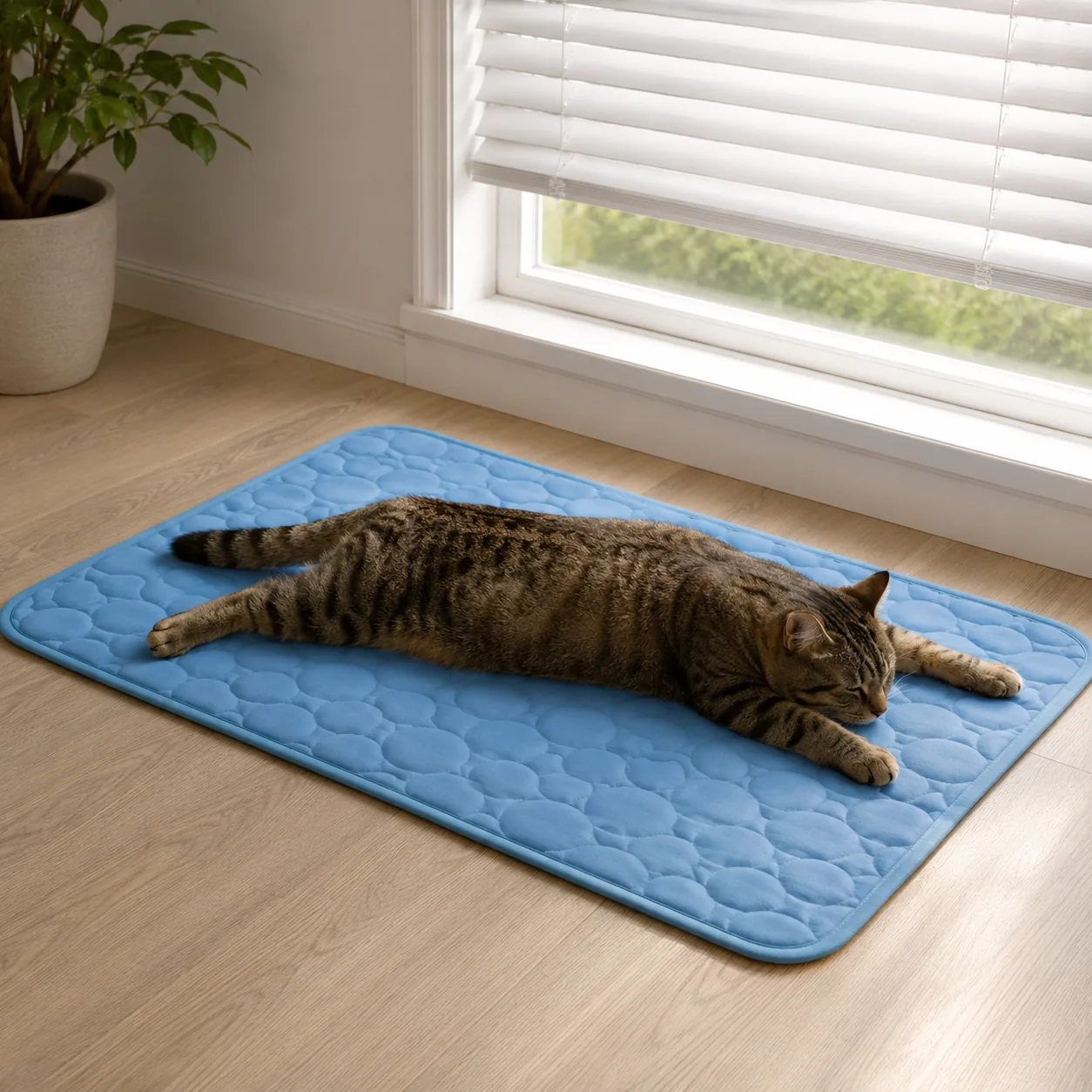
| Early | Lies stretched out flat on tile, in the sink or the shower; grooms far more than usual; eats less; goes listless | Set up a cool place to retreat to, water in several spots |
| Clear | Hot ears, restlessness, constantly looking for new spots, breathing faster than usual | Shade the room, damp cloth, keep an eye on her |
| Critical | Visible open-mouth panting, heavy drooling, dark red gums | Emergency: call the vet and go |
| Life-threatening | Unsteady gait, vomiting, total listlessness, seizures | Straight to the vet |
A cat's normal body temperature sits between 100.5 and 102.5 °F (38 to 39.2 °C), slightly higher than a dog's. From 104 °F (40 °C) upward the situation is critical.
What actually helps indoors
Air out early, shade during the day. It sounds obvious, but it is the single most effective thing you can do in an apartment. Blinds down before the sun hits the glass, not after.
More water stations. Cats have a weak thirst drive, and one bowl in the kitchen often is not enough. Two or three bowls in different places, away from the food, get accepted far better. A fountain helps, because moving water is more inviting to a cat.
A damp cloth rather than a shower. Wipe a damp cloth over the coat, ears and paws. Pouring water over a cat creates stress, and stress creates heat.
Brushing, above all on long coats. Dead undercoat works as an insulating layer. On a Maine Coon, a Persian or a Norwegian Forest Cat, regular brushing through the summer makes a difference you can feel. Shaving, on the other hand, is not a good idea: the coat also protects against sun.
A cool surface in a place you know about. Your cat will go looking for one anyway, usually in the bathroom or the hallway. A cooling mat is the same idea, except you decide where it goes, and it works with no power and no gel. How it manages that physically is explained on the page about how cooling mats work.
What does not help, even though it sounds logical
Ice cubes in the water. Many cats simply will not drink very cold water, and the whole point was to get them drinking more.
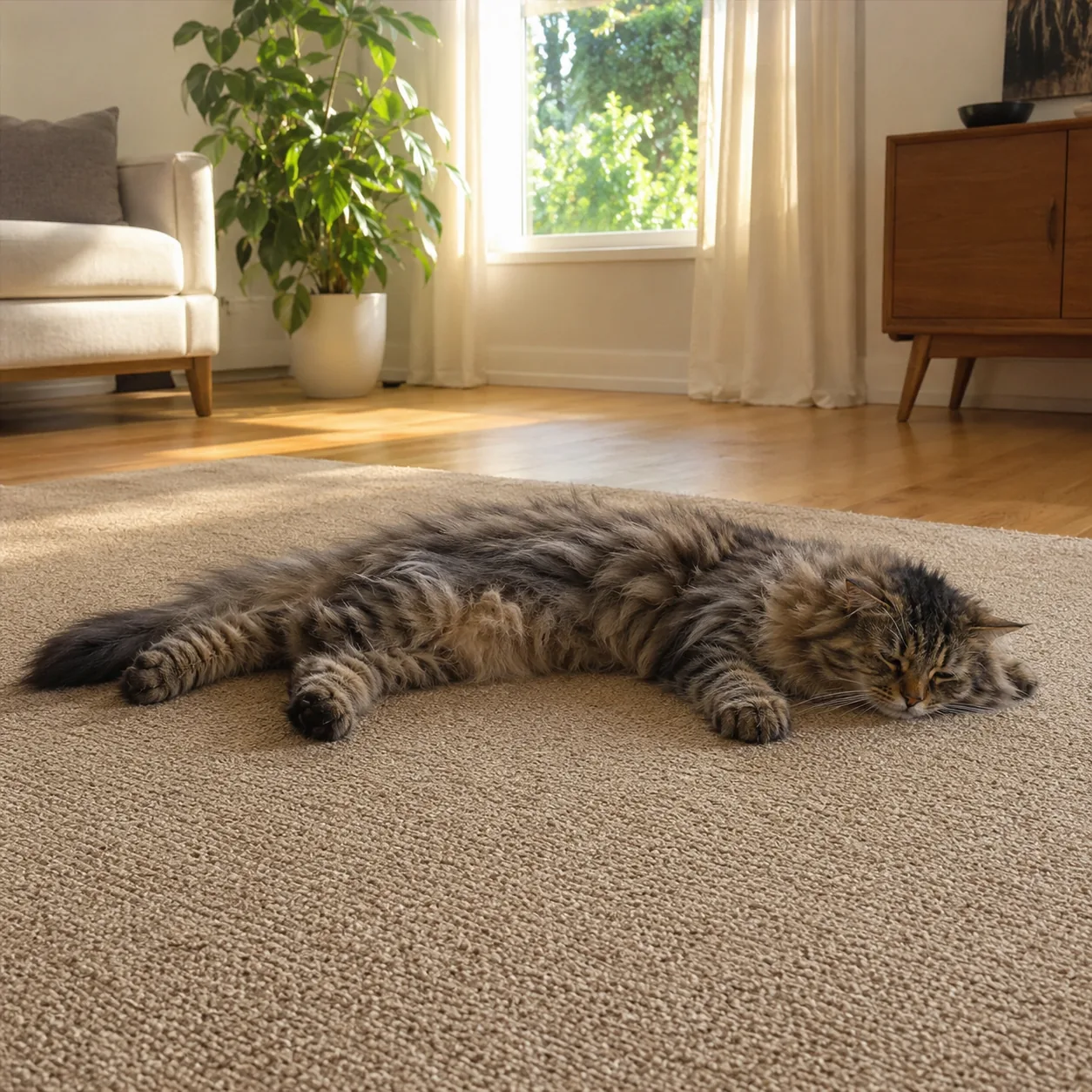
A fan aimed at the cat. Moving air cools mainly by evaporating sweat, and a cat has none. A fan that circulates the room air does more than one pointed at the animal.
Freezer packs with nothing in between. Skin in direct contact with frozen material can be far too cold in one spot, especially on small and older animals. Wrap them in a towel, and keep watch.
Shaving the coat. With cats it almost never makes sense. Fur insulates in both directions and protects the skin from burning.
Which cats need more care
Three body types cope worse with heat than the rest, and it is a matter of anatomy rather than fashion.
The British Shorthair has, despite the short coat, a very dense undercoat and a compact build. The Persian stacks two risk factors: long fur and a flat face, which makes breathing harder work. The Maine Coon too, with a semi-long coat and up to 18 lb of body weight, has a harder time of it.
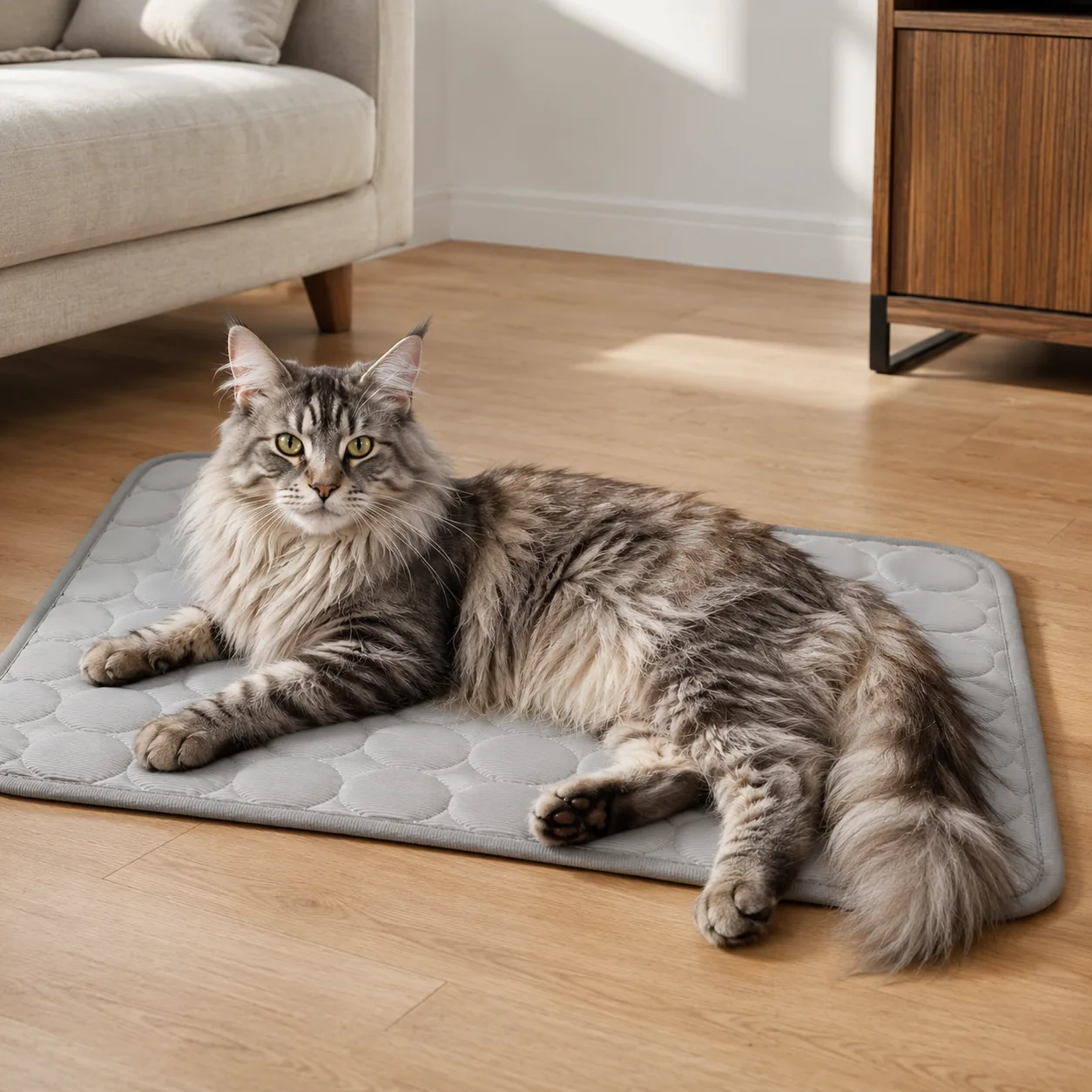
On top of those, regardless of breed: very young kittens, cats over ten, overweight cats, and any cat with heart or breathing problems.
Frequently asked questions
Is panting normal in cats?
No. Unlike dogs, panting is not part of normal cat behavior. A short bout after energetic play or a stressful car ride can happen. But a cat panting at rest is a serious sign: move them to a cool room and call your vet right away.
At what temperature do cats start to struggle?
Cats handle heat better than dogs do, since their ancestors lived in dry regions. From about 86 °F upward, though, and especially in high humidity, it gets heavy for them too. The most sensitive are long-haired breeds, flat-faced cats like the Persian, kittens, seniors and overweight cats.
Should I wet my cat?
Do not pour water over them: for most cats that is enormous stress, and stress produces more heat. Wiping a damp cloth over the coat, ears and paws is more effective and far better tolerated. In an emergency the usual rules apply: lukewarm water, never ice cold, starting from the extremities.
Why does my cat drink so little in summer?
Cats naturally have a weak thirst drive, because they originally took in fluid from their prey. If you feed dry food, watch water intake in summer in particular. Several bowls in different places, a fountain, or a little wet food do far more than one full bowl.
This text does not replace veterinary advice. If your cat is showing critical signs, contact a veterinary practice straight away.
A cool spot you get to choose
Your cat goes looking for one anyway. Four sizes, no gel and no power.
Free shipping to 18 countries · 30-day returns · We reply within 24 hours