
What size cooling mat does your dog or cat need?

Tessa Larkin · Writer, pet wellbeing and pet gear
Tessa lives with a Labrador and two cats on the Texas Gulf Coast, one of the hottest and most humid corners of the country in summer. For several seasons she has been testing, in real conditions, what actually helps animals through the heat and what only looks like it does.
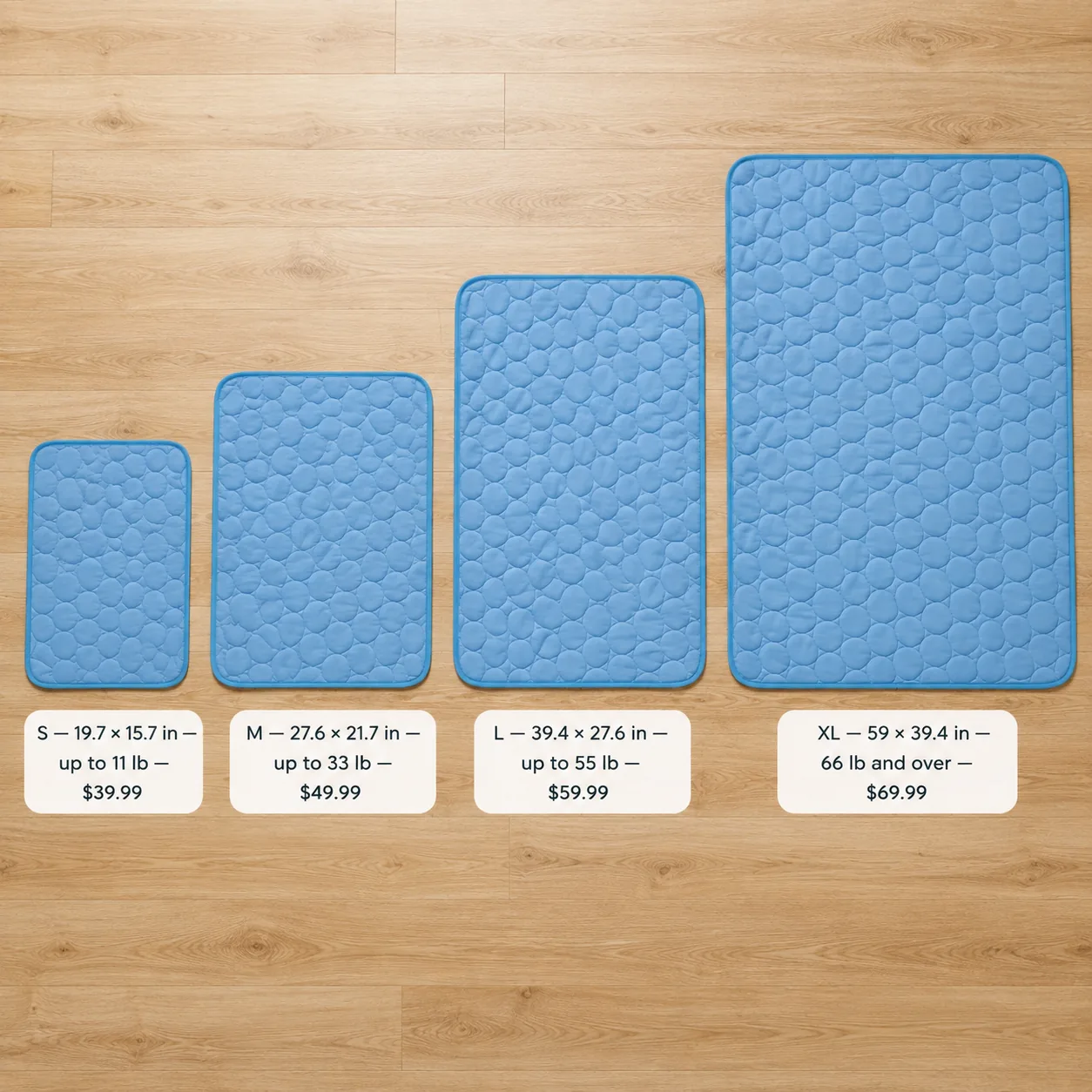
The four sizes at a glance
| Size | Dimensions | Weight | Typical pets |
|---|---|---|---|
| S | 19.7 × 15.7 in | up to 11 lb | Chihuahua, Miniature Dachshund, Havanese, British Shorthair, kittens, rabbits |
| M | 27.6 × 21.7 in | up to 33 lb | French Bulldog, Dachshund, Jack Russell, Pug, Cocker Spaniel, Maine Coon |
| L | 39.4 × 27.6 in | up to 55 lb | Labrador Retriever, Golden Retriever, Border Collie, Boxer, Australian Shepherd |
| XL | 59 × 39.4 in | 66 lb and over | German Shepherd, Bernese Mountain Dog, Rottweiler, Husky, Great Dane, multiple pets |
The mistake that costs the most: comparing letters
Size letters in pet products are not standardized. Every maker decides for itself what to call an S or an XL, and the differences are substantial.
Concretely: a 39 × 27 in mat is often sold as an XL. Here that is our L. Someone thinking “the XL was fine last time” who orders an XL from us receives 59 × 39.4 in, which is far more surface than they had in mind. And the reverse is worse: anyone who bought elsewhere and shops by letter here orders one size too small.
Surface area is in any case one of the criteria you can judge any mat by, whatever the brand. The others are on the page about how to choose the best one, along with the question of what a “best tested” label is really worth.
How to measure properly in one minute
First, measure your pet lying down, stretched out on one side, from the tip of the nose to the base of the tail. Not the height at the shoulder, that is no use here.
Second, add 4 to 6 inches. Animals stretch out in their sleep, and the whole point of the mat is for the underside of the body to have as much contact as possible.
Third, compare that number with the long side of the mat. If it only just fits, size up.
There is a second route that works just as well: look at where your pet lies down by themselves in summer, and measure that patch. The stretch of hallway tile, or the spot in front of the patio door, tells you with decent accuracy how much room they take up.
The most registered breeds in the US, and why the weight table matters more
On the American Kennel Club’s 2025 registration figures, the French Bulldog leads for the fourth year running, followed by the Labrador Retriever, the Golden Retriever and the German Shepherd Dog. Which is worth noticing here: the first is a flat-faced breed and the next three are double-coated, so all four need more contact surface than their weight alone suggests.
| Breed | Weight | Size | Note |
|---|---|---|---|
| Chihuahua | 3-6 lb | S | one of the most common toy breeds |
| Miniature Poodle | 10-15 lb | S / M | curly coat, sheds very little |
| Jack Russell Terrier | 13-17 lb | M | very active, heats up through play |
| Dachshund | 16-32 lb | M | 5th in the AKC 2025 rankings, long back so size up |
| French Bulldog | 16-28 lb | M | 1st in the AKC 2025 rankings, flat-faced, struggles badly in heat |
| Beagle | 20-30 lb | M / L | 7th in the AKC 2025 rankings |
| Labrador Retriever | 55-80 lb | L / XL | 2nd in the AKC 2025 rankings, double coat |
| Golden Retriever | 55-75 lb | L / XL | 3rd in the AKC 2025 rankings, long double coat |
| German Shepherd | 50-90 lb | XL | 4th in the AKC 2025 rankings, dense undercoat |
| Rottweiler, Bernese Mountain Dog, Great Dane | 80 lb and over | XL | large breeds, the Bernese being a mountain dog |
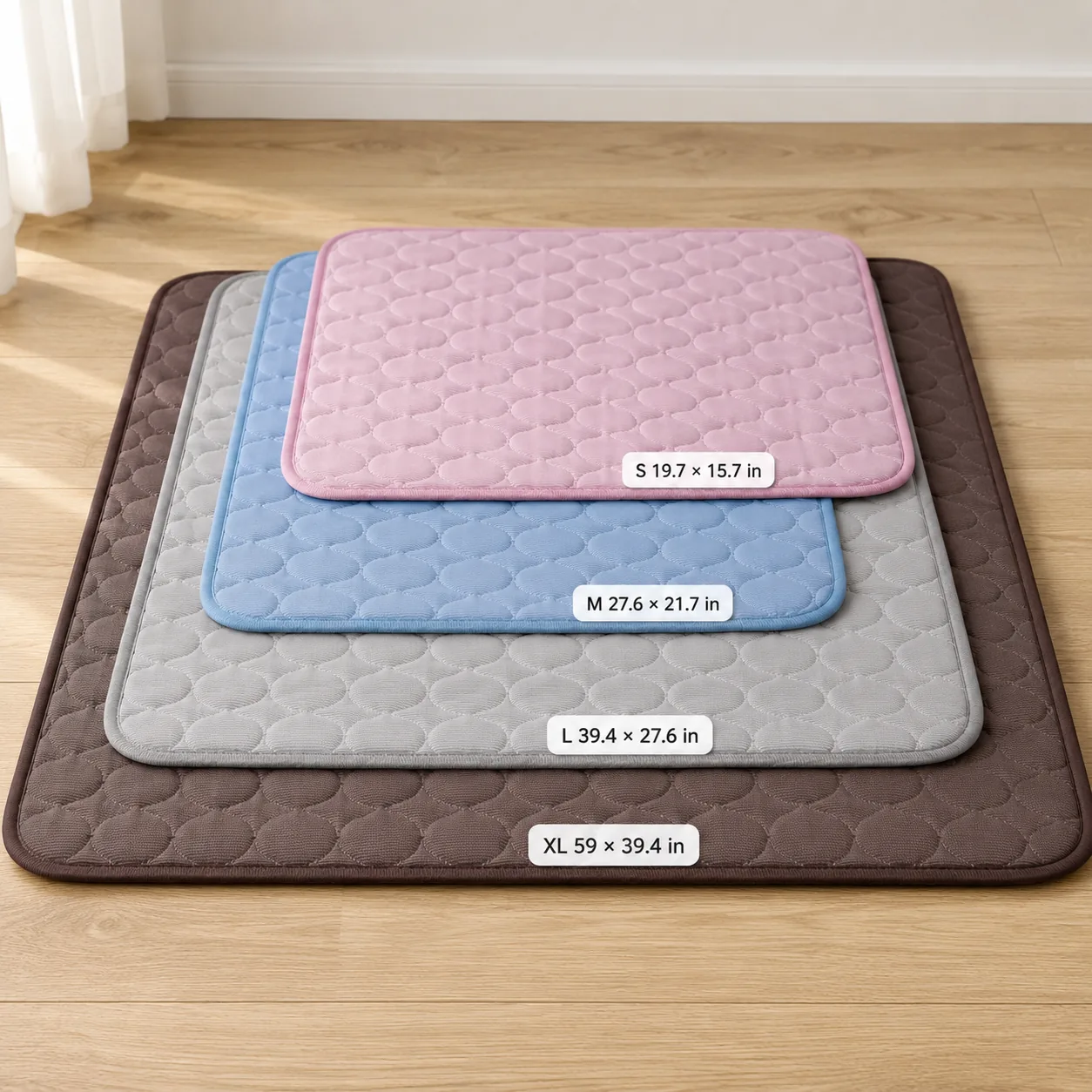
For a mixed breed the weight table applies directly: up to 11 lb S, up to 33 lb M, up to 55 lb L, 66 lb and over XL. If your dog sits between the L and the XL, take the XL.
The breeds that struggle most, where size matters even more
This is not a footnote: it is the reason surface area counts double with these dogs.
The Golden Retriever and the Labrador Retriever carry a coat that holds heat in. The German Shepherd has a dense undercoat that works as an insulating layer in summer. All three need plenty of contact surface, precisely because the coat slows the heat transfer down anyway: with them, one size up is the safer call.
The French Bulldog is the clearest case, and it is the most registered breed in the country. Dogs regulate temperature almost entirely by panting, and a short-muzzled dog is bad at exactly that. What is left to them is shedding heat through the underside of the body. For that dog, a large enough surface to lie on is not comfort, it is the main route. The same goes for the Pug, the Bulldog, the Boxer and, among cats, the Persian.
Cats: the Maine Coon problem
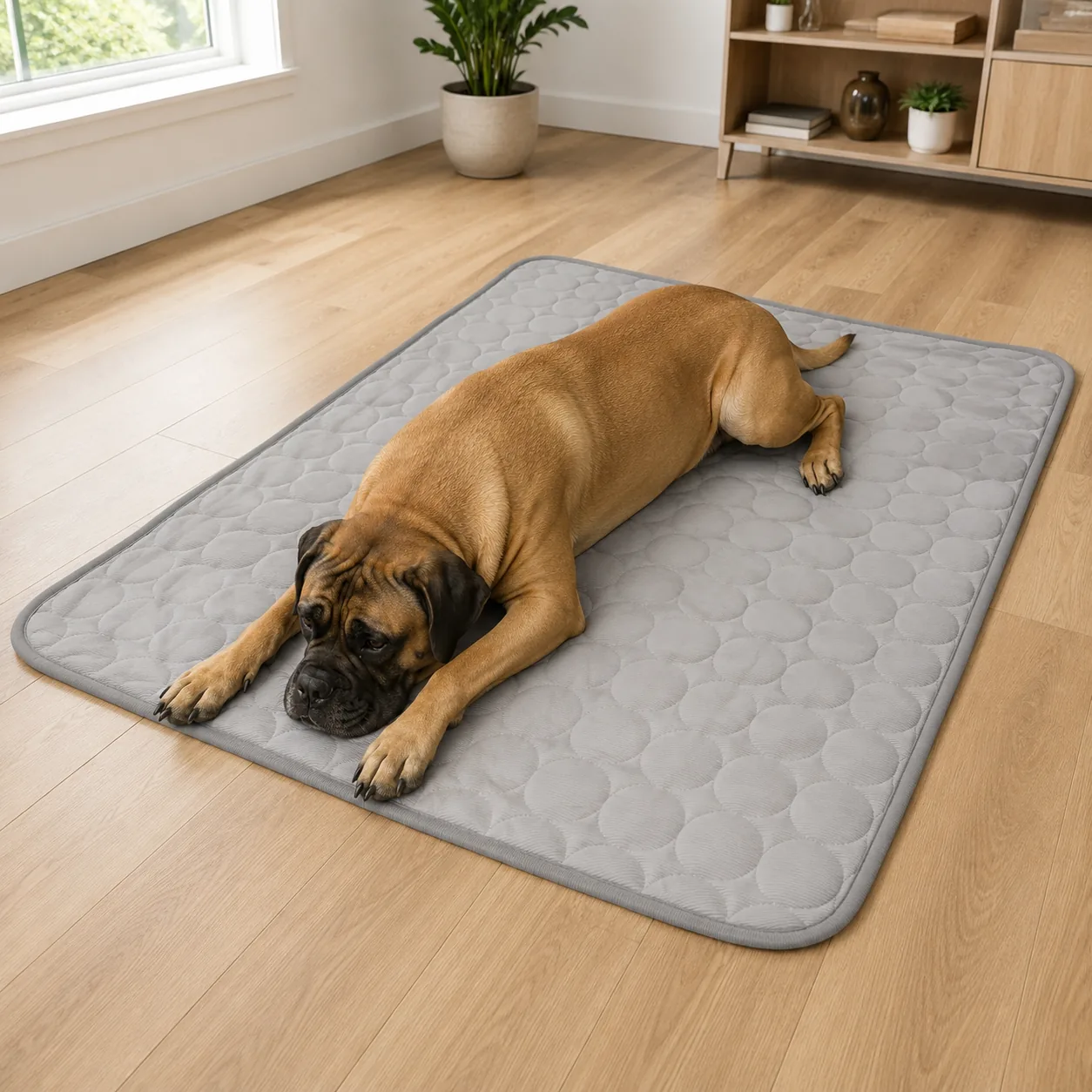
Among cats the difference in build is wider than people expect, and this table works from standard breed weights.
| Breed | Weight | Size | Note |
|---|---|---|---|
| Domestic Shorthair | 8-11 lb | S | the everyday American house cat |
| British Shorthair | 9-18 lb | S / M | dense undercoat |
| Bengal | 8-15 lb | S | very active |
| Persian | 7-13 lb | S / M | long coat and a flat face |
| Maine Coon | 13-18 lb | M | the largest domestic breed, over three feet nose to tail |
A Maine Coon does not fit on 19.7 x 15.7 in. It is the largest domestic breed, reaching 18 lb and over three feet with the tail. It needs the M at least. A four-pound Chihuahua, on the other hand, is comfortable on the S, dog or not. That is exactly why we order by weight and not by species. There is more on cats on the page about the cat cooling mat.
Two pets, one household
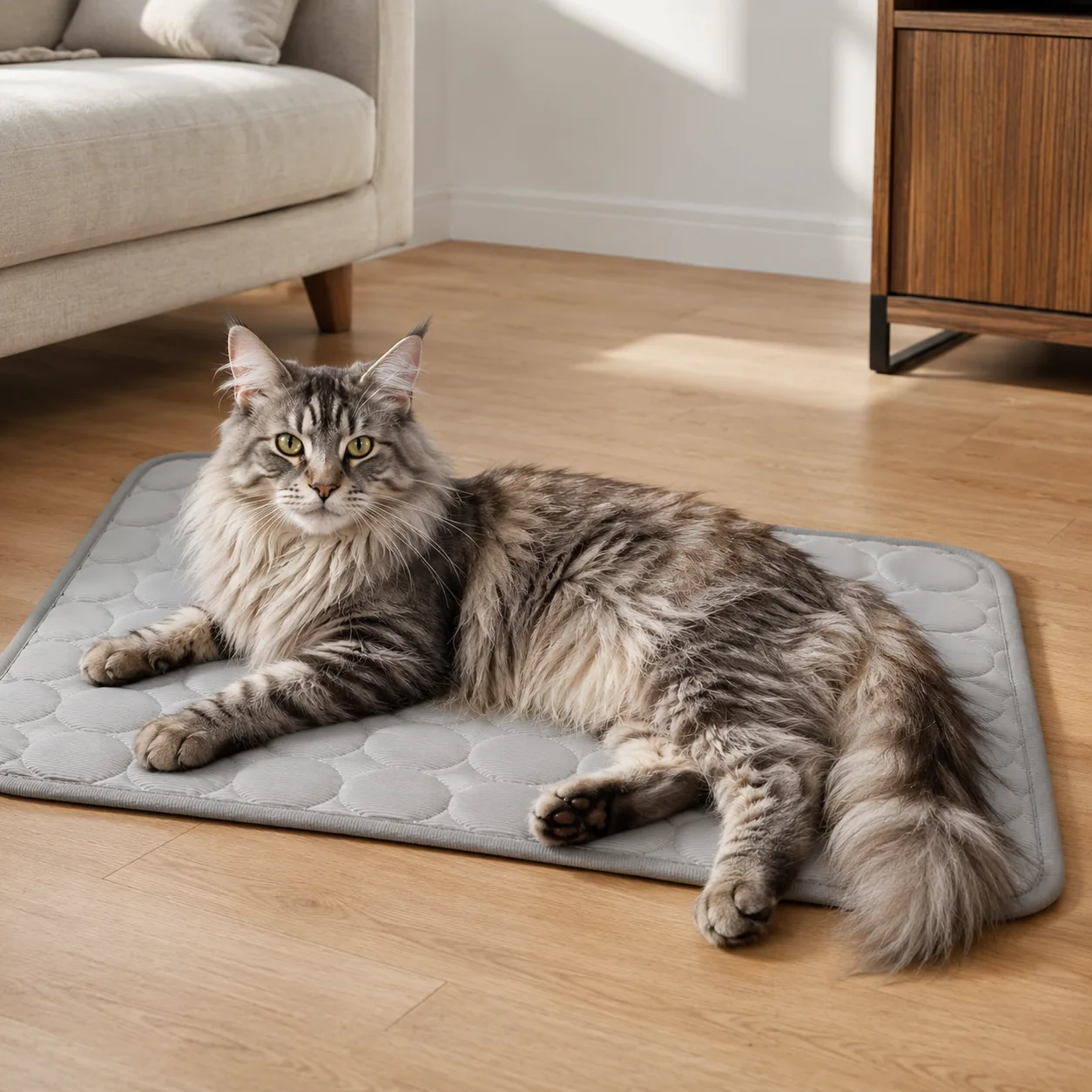
If your animals get along, one big mat is almost always better than two small ones. They lie down next to each other, and each can shift once their own patch has warmed up. An L at 39.4 x 27.6 in is enough for two medium dogs or three cats.
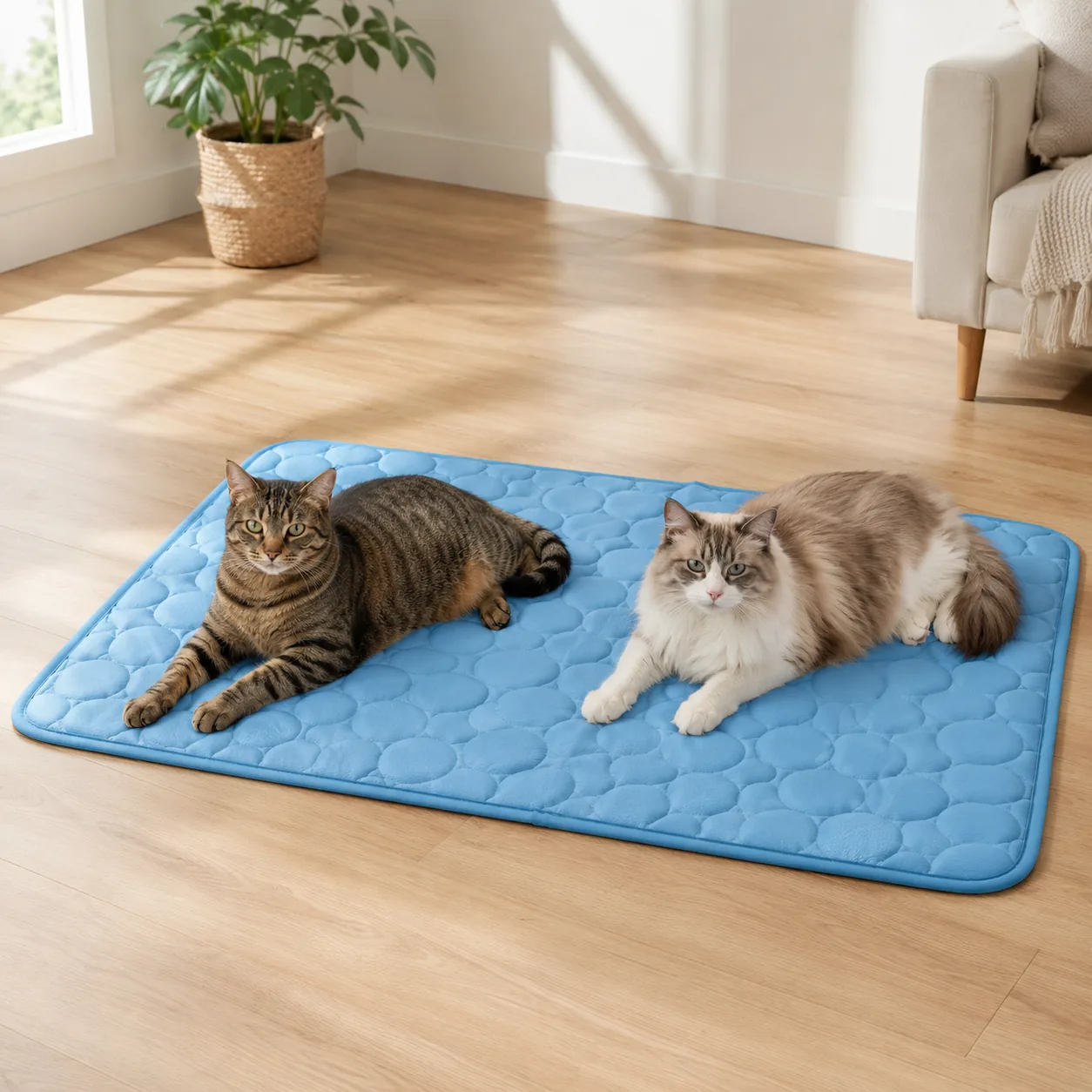
If they avoid each other, or you want to cover two rooms, separate mats make more sense. That is what the set of three is for: pick two sizes, and the third mat is free, in the smaller of the two, in whichever color you like.
Frequently asked questions about sizing
What size cooling mat does my dog need?
Go by weight: up to 11 lb take the S (19.7×15.7 in), up to 33 lb the M (27.6×21.7 in), up to 55 lb the L (39.4×27.6 in), and 66 lb and over the XL (59×39.4 in). When in doubt, size up, because a dog that only half fits only half cools.
Why is your L an XL at other sellers?
Because size letters in pet products are not standardized: every maker decides for itself what counts as an S or an XL. A 39×27 in mat is often sold as an XL elsewhere, while here that is our L. That is why we print the inches next to the letter every time.
How do I measure my dog properly?
Measure your dog lying down, stretched out on one side, from the tip of the nose to the base of the tail. Add 4 to 6 inches so they can stretch. That length has to fit along the long side of the mat. Height at the shoulder is not useful here.
Does a Maine Coon fit on the S?
No. The Maine Coon is the largest domestic breed, reaching 18 lb and over three feet with the tail. It needs the M (27.6×21.7 in) at least. A four-pound Chihuahua, meanwhile, fits the S comfortably, dog or not. Weight decides, not species.
One large mat or two small ones?
With two pets that get along, one large mat is usually better: they lie down together and each can still shift around. If they avoid each other, or if you want to cover two rooms, separate mats make more sense. That is what the set of three is for, where the third one is free.
What if I measured wrong?
You have 30 days to send it back and the return is free. Write to us with the breed and the weight and we will tell you which size we recommend before you buy.
Not sure? Send us the breed and the weight at [email protected] and we answer within 24 hours with a concrete recommendation. And if it still turns out wrong: 30 days to return it, free.
Four sizes, from 19.7 x 15.7 to 59 x 39.4 in
The inches sit next to the letter every time. Wrong size? 30 days to return it, free.
Free shipping to 18 countries · 30-day returns · We reply within 24 hours