
Dog heatstroke: how to recognize it and act fast

Tessa Larkin · Writer, pet wellbeing and pet gear
Tessa lives with a Labrador and two cats on the Texas Gulf Coast, one of the hottest and most humid corners of the country in summer. For several seasons she has been testing, in real conditions, what actually helps animals through the heat and what only looks like it does.
Why dogs are so exposed
A dog has very few sweat glands. The ones it has sit in the paw pads and make almost no difference. Its temperature regulation runs almost entirely through panting: moisture evaporates from the tongue and airways and carries heat away.
That system has two weak points. It costs muscular effort, so it produces heat of its own, and it works worse and worse as the air gets more humid. On a muggy day at 82 °F a dog is under more strain than at a dry 90 °F. That is why the closeness before a thunderstorm, and closed rooms, are more treacherous than the number on the thermometer.
The second route left to it is shedding heat through the underside of the body, where the coat is thin. It is why dogs lie on the tile, in the bathtub or on the basement floor in summer.
The signs, in the order they appear
| Stage | How you recognise it | What to do |
|---|---|---|
| Early | Panting hard, restless, looking for shade or tile, no longer wants to walk | Out of the heat, offer water, let them rest |
| Clear | Panting very fast with a broad tongue, heavy drooling, bright red gums, racing heart | Start cooling, call the vet |
| Critical | Unsteady gait, vomiting, diarrhea, dark red or bluish gums, listlessness | Emergency, straight to the vet |
| Life-threatening | Collapse, seizures, loss of consciousness | Leave now, keep cooling on the way |
A dog's normal body temperature sits between 99.5 and 102.2 °F. From 104 °F you are into hyperthermia, and from 106 °F the situation is critical. A thermometer is worth keeping at home, and the reading is taken rectally.
The four steps that matter
First, out of the heat. Shade, a cool room, moving air. On its own that often does more than everything else combined.
Second, call. Phone the clinic while you start cooling your dog, not afterwards. They will tell you whether to come in and how fast.
Third, cool from the bottom up. Lukewarm water on the paws and legs, then the belly and inner thighs. Lay a damp towel on, but do not wrap your dog in it, or the heat stays trapped underneath. A fan increases evaporation.
Fourth, offer water without forcing it. Small amounts of lukewarm water. A dog that is staggering or unconscious must never be made to drink.
The four mistakes that make it worse
Ice water or ice. Intense cold constricts the blood vessels in the skin. Less heat leaves the body, even though it feels like the opposite to the touch, and the circulation is put under further strain.
Wrapping them in a wet blanket. What looks like cooling works as an insulating layer: the heat stays underneath.
Going for the head. Start at the extremities. Water on the head and neck of a dazed dog can also end up in the airways.
Stopping when they seem better. Heatstroke can damage organs, and that damage is sometimes only visible hours later. Even a dog that has perked up again needs to be seen.
The breeds most at risk in the US
On the 2025 registration figures, the most popular dog in America is the French Bulldog, and it has held that place for four years running. It is also a brachycephalic breed: the short muzzle makes panting inefficient, which takes away the main route a dog has for shedding heat. The same goes for the Bulldog, tenth on the same list.
The next three, the Labrador Retriever, the Golden Retriever and the German Shepherd Dog, are all double-coated. So the four most popular dogs in the country are each in one of the two categories that struggle most. The full table by level of risk is in which dog breeds struggle most in the heat.
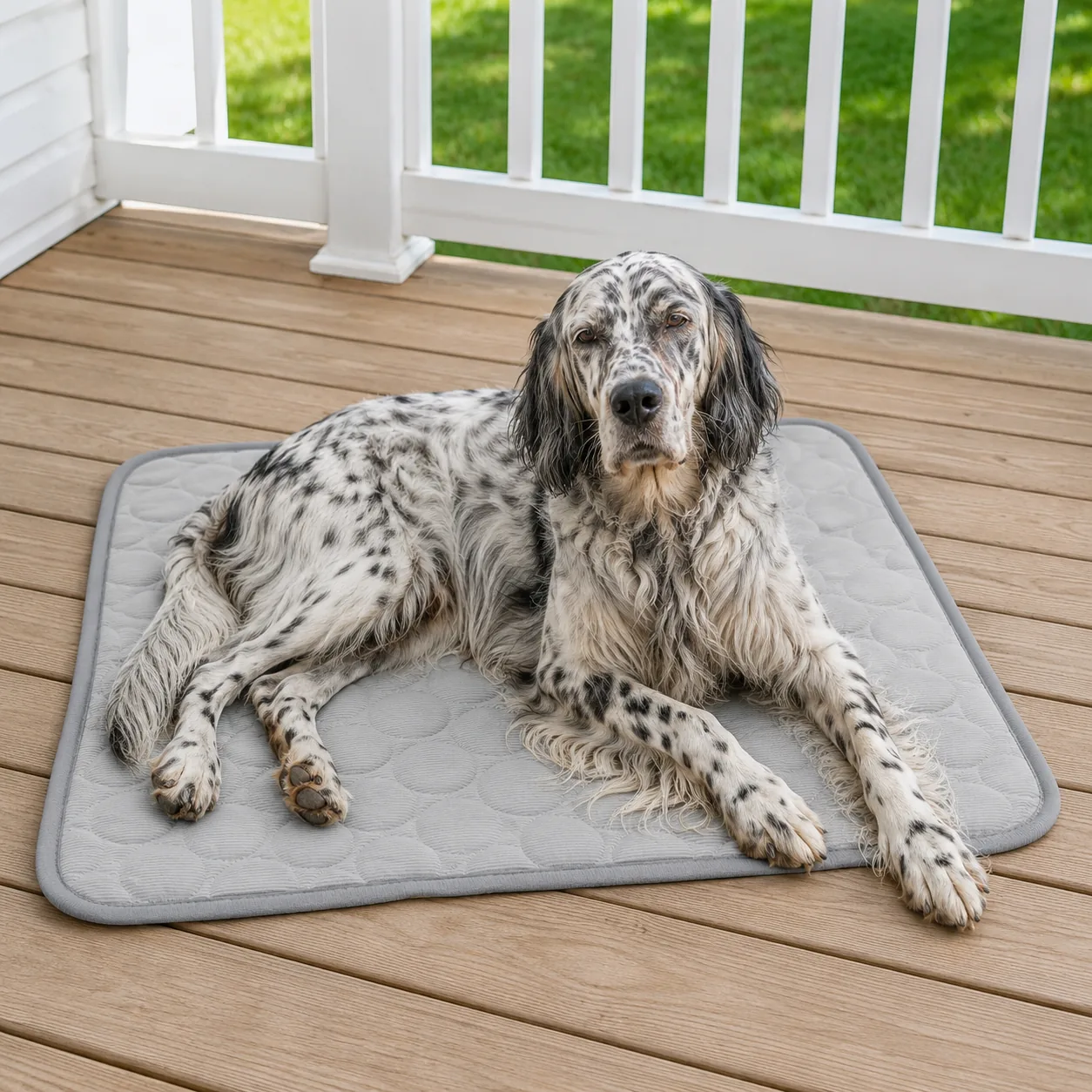
Large, heavy breeds have a harder time for a different reason: body mass. A big body produces more heat and has, proportionally, less surface to lose it through.
One useful clarification: registration figures only count dogs recorded in the stud book. The most common dog in American homes appears in no breed ranking at all, and for a mixed breed what applies is simply their build: coat, size, age and weight.
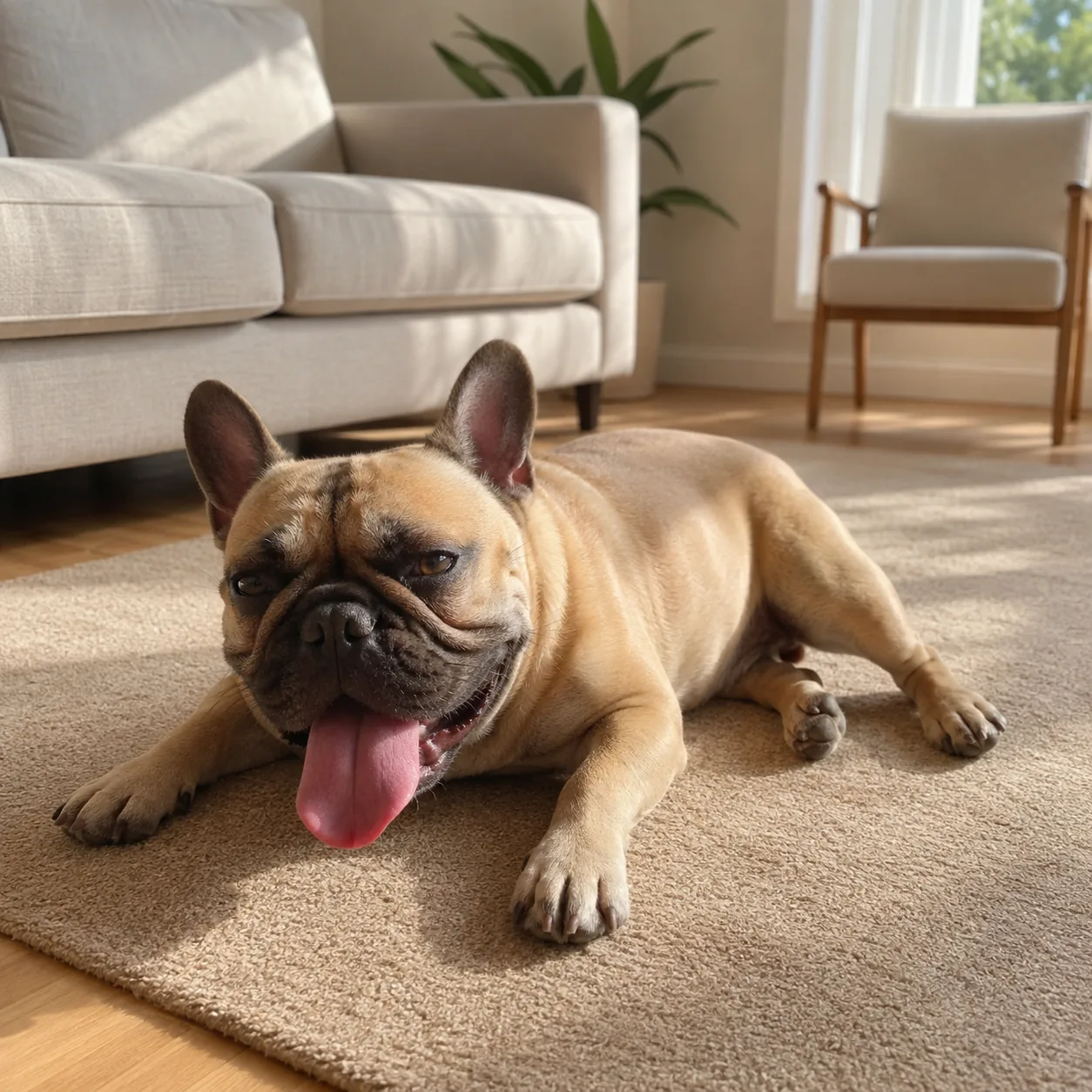
Prevention is the only strategy that works
By the time there is heatstroke, something has already gone wrong. What genuinely helps is ordinary and it works: move walks to early morning and late evening. Check the asphalt with the back of your hand for five seconds, and if it burns you it burns their paws. Always carry water. And never leave your dog alone in a parked car, not briefly, not in the shade, not with a window open.
Add to that a cool place to retreat to indoors. A dog that takes itself off to the hallway tile is telling you precisely what it needs. A cooling mat is nothing more than that kind of surface, in a spot you choose, and one you can carry. How it works physically is explained on the page about how cooling mats work.
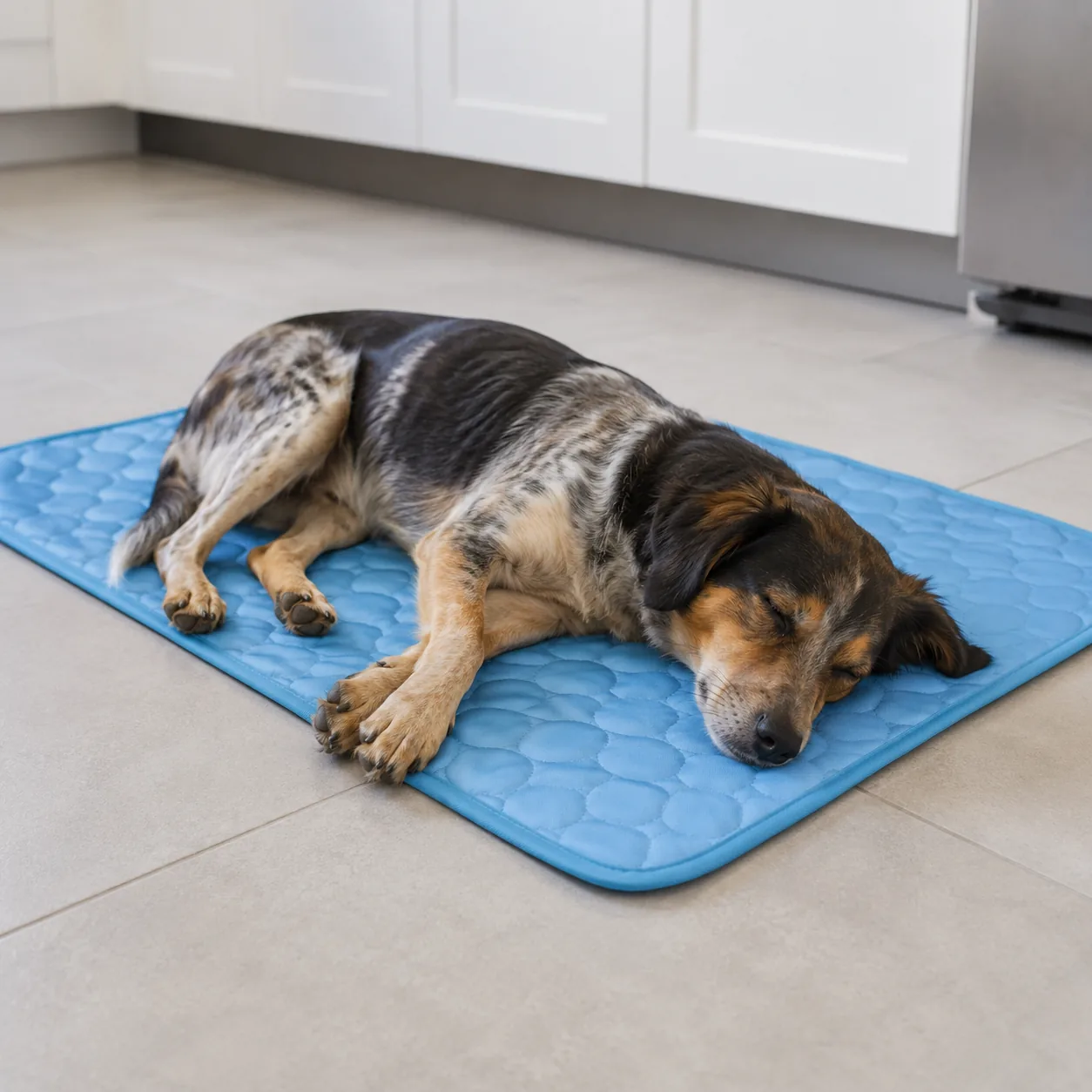
One clarification, because it matters here: the mat is prevention. It does not treat heatstroke and it does not replace a vet.
Frequently asked questions
At what temperature is a dog at risk of heatstroke?
There is no fixed threshold, because humidity, coat, age and breed count too. From 77 °F it is worth paying attention, and from 86 °F especially with flat-faced breeds, long-coated dogs, puppies, seniors and overweight dogs. In a parked car it can turn fatal within half an hour at just 68 °F outside.
What is the first thing to do if I suspect heatstroke?
Get your dog out of the heat straight away, into shade or a cool room, and call the vet while you start cooling them. Not cool first and think later: heatstroke can damage internal organs even when the dog appears to have recovered.
Can I pour cold water on my dog?
Not ice cold. Excessive cold constricts the blood vessels in the skin: less heat leaves the body and the circulation is put under further strain. Use lukewarm water and start with the paws and legs, not the head.
Can a cooling mat prevent heatstroke?
It can help you not get there, by giving your dog a surface to shed heat into on hot days. It is not an emergency device, though. If your dog is showing the signs of heatstroke, they need a vet, not a mat.
This text does not replace veterinary advice. If you suspect heatstroke, contact a veterinary practice or an emergency service straight away.
A cool spot, before it turns critical
Ice silk with no gel, no power and nothing to put in the freezer. Four sizes from 19.7 × 15.7 in to 59 × 39.4 in, four colors, from $39.99.
Free shipping to 18 countries · 30-day returns · We reply within 24 hours