
Senior dogs and cats in summer

Tessa Larkin · Writer, pet wellbeing and pet gear
Tessa lives with a Labrador and two cats on the Texas Gulf Coast, one of the hottest and most humid corners of the country in summer. For several seasons she has been testing, in real conditions, what actually helps animals through the heat and what only looks like it does.
Why age makes heat worse
Regulation gets slower. Circulation responds with more delay, the blood vessels in the skin widen less, and heat reaches the surface less well. A young dog recovers from exertion in a few minutes. An older one needs far longer.
Thirst is felt less. That is true of animals as it is of people. Add kidney trouble, which is common in older cats, and the animal loses more fluid without drinking any more to make up for it.
Moving takes more effort. A stiff animal will not get up to go two feet further into the shade. It stays where it is, even once that spot has warmed up. This is the point that weighs most in daily life, and the one people think about least.
And weight usually joins in. Less movement over the years, the same portion in the bowl: fat insulates, and every extra pound has to be carried on every step.
When an animal counts as senior
| Animal | Considered senior from about |
|---|---|
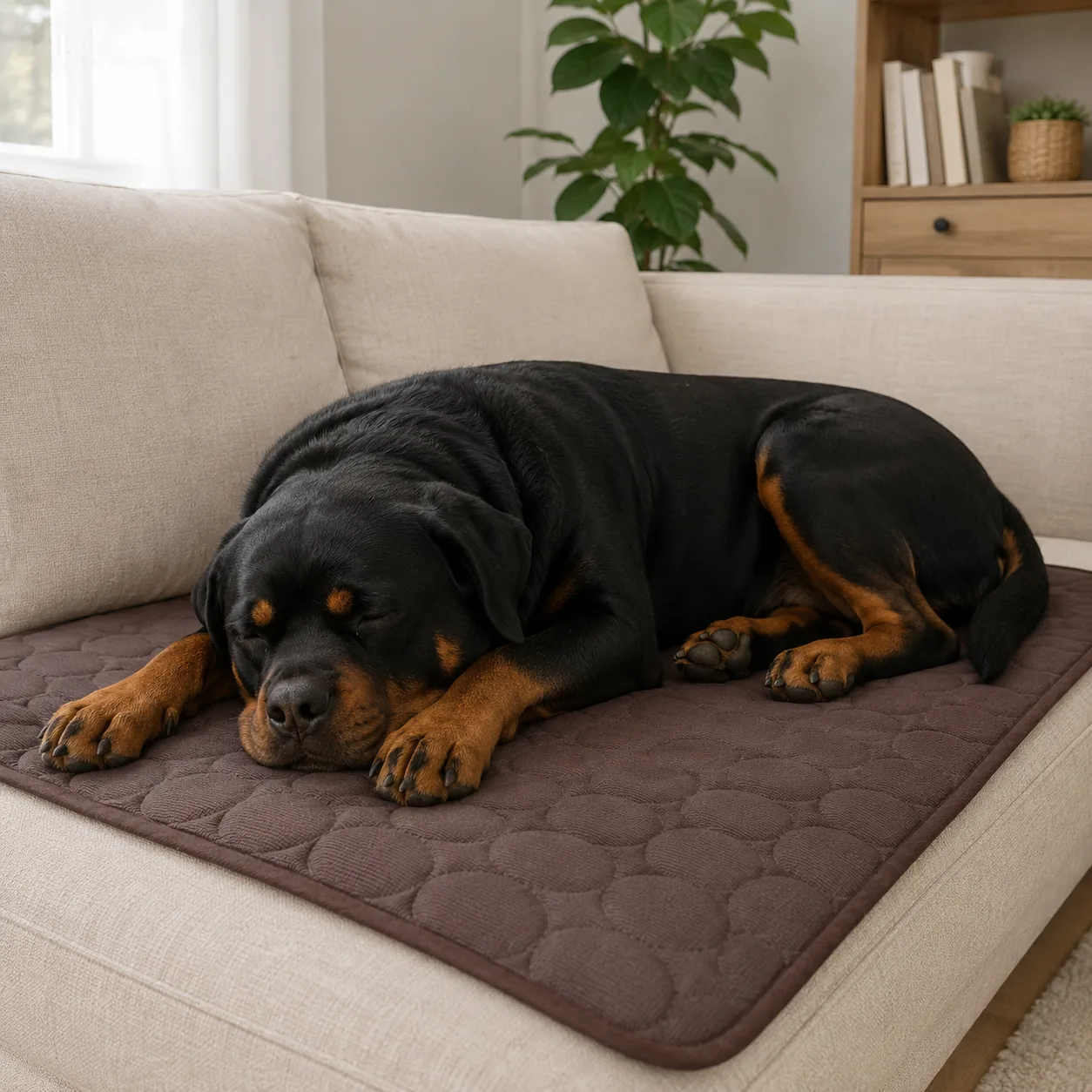
| Large dogs | 6 years (Bernese Mountain Dog, Great Dane, Rottweiler, Mastiff) |
| Medium dogs | 8 years (Labrador Retriever, Australian Shepherd, Boxer, German Shorthaired Pointer) |
| Small dogs | 10 to 12 years (Chihuahua, Dachshund, Jack Russell Terrier) |
| Cats | 11 years |
The number is only a pointer. What tells you far more is whether something has changed: does he stay lying down longer after a walk than he used to? Has she started looking for new places to sleep? Shifts like that say more than a date of birth.
The signs that are not about age
The reason for that warning is ordinary, and it repeats every summer: an animal that suddenly does less in July gets written off as having aged. Sometimes that is true. Sometimes it is a heart that no longer holds up under load, and then the moment the check happens is what counts.
The classic signs of heatstroke apply to older animals too, they just arrive earlier. The sequence and the four first-aid steps are on the page about heatstroke in dogs, and for cats in signs your cat is overheating.
What actually changes, day to day
Water where they can reach it without stairs. An older dog with stiff joints will not go down a floor for a drink. Two or three bowls on the level where he already spends his time raise how much he drinks far more than one full bowl does.
Several short outings instead of one long one. Movement still matters for joints and circulation, only the way you spread it out changes. And test the asphalt: older paw pads are often more sensitive, and the five-second check with the back of your hand counts double here.
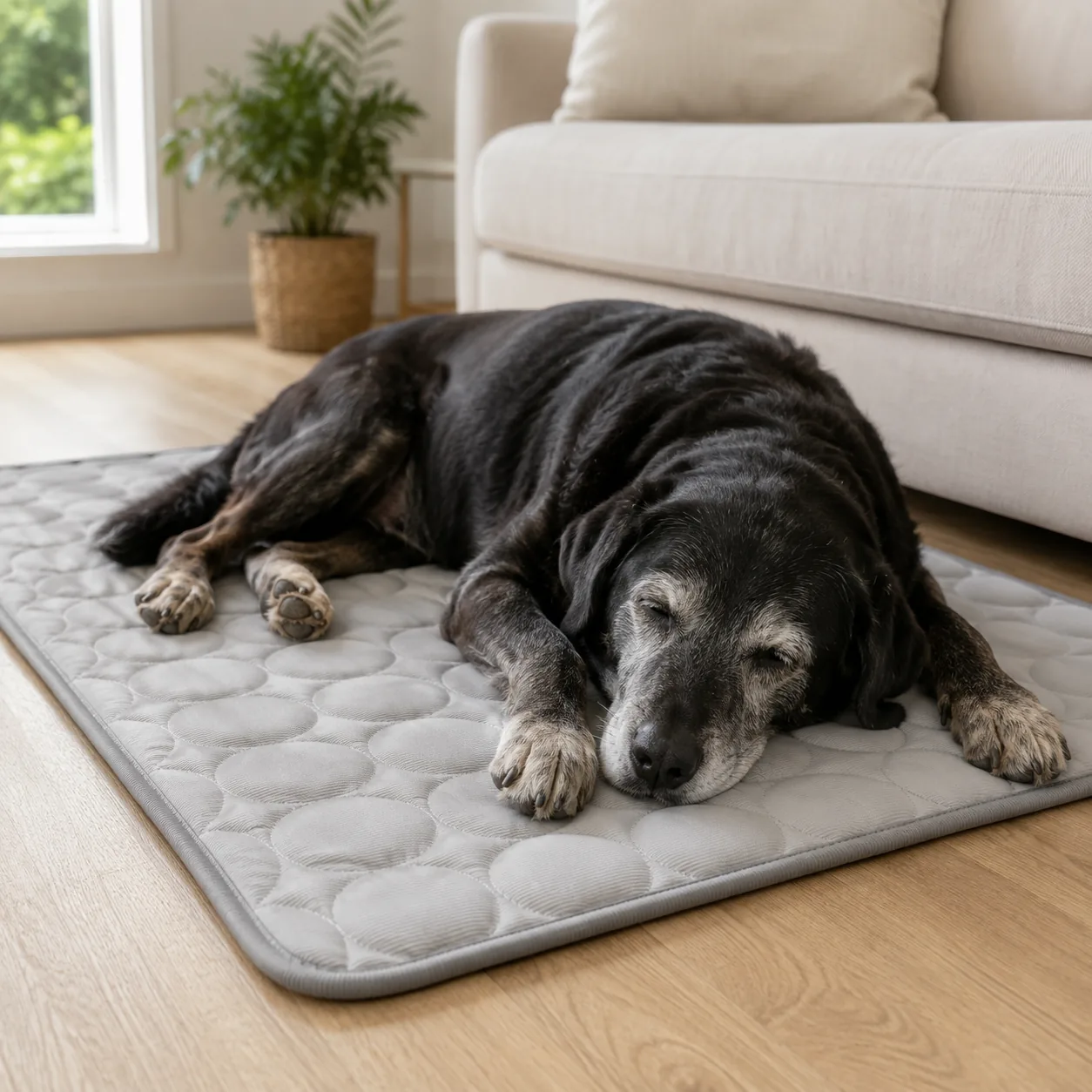
Bring the cool spot to them, not the other way round. This is the real point with older animals. Through the day, a young dog moves from the kitchen tile to the bathroom floor and back. An older one stays put. So the cool spot has to be where they already lie down.
That is exactly what a cooling mat is for: a surface that absorbs heat, in a place you choose, padded instead of hard like tile. To be clear, because these are two things worth keeping apart: what we are talking about here is comfort underfoot and temperature. If an older animal is in pain or moving worse, the answer is an appointment, and it starts there.
The detail almost nobody thinks about: height
An animal that struggles to get up avoids surfaces it has to climb onto. A raised bed with a thick bolster is something a stiff senior eventually just stops using, however soft it is, and lies down on the hard floor next to it instead.
A flat mat has a practical advantage here that has nothing to do with cooling: there is nothing to step over. You lie on it the way you lie on the floor. With an older animal that detail counts for more than it sounds like, and it is worth checking before you choose: the formats are compared on the page about cooling mat, vest or bed.
And with older cats
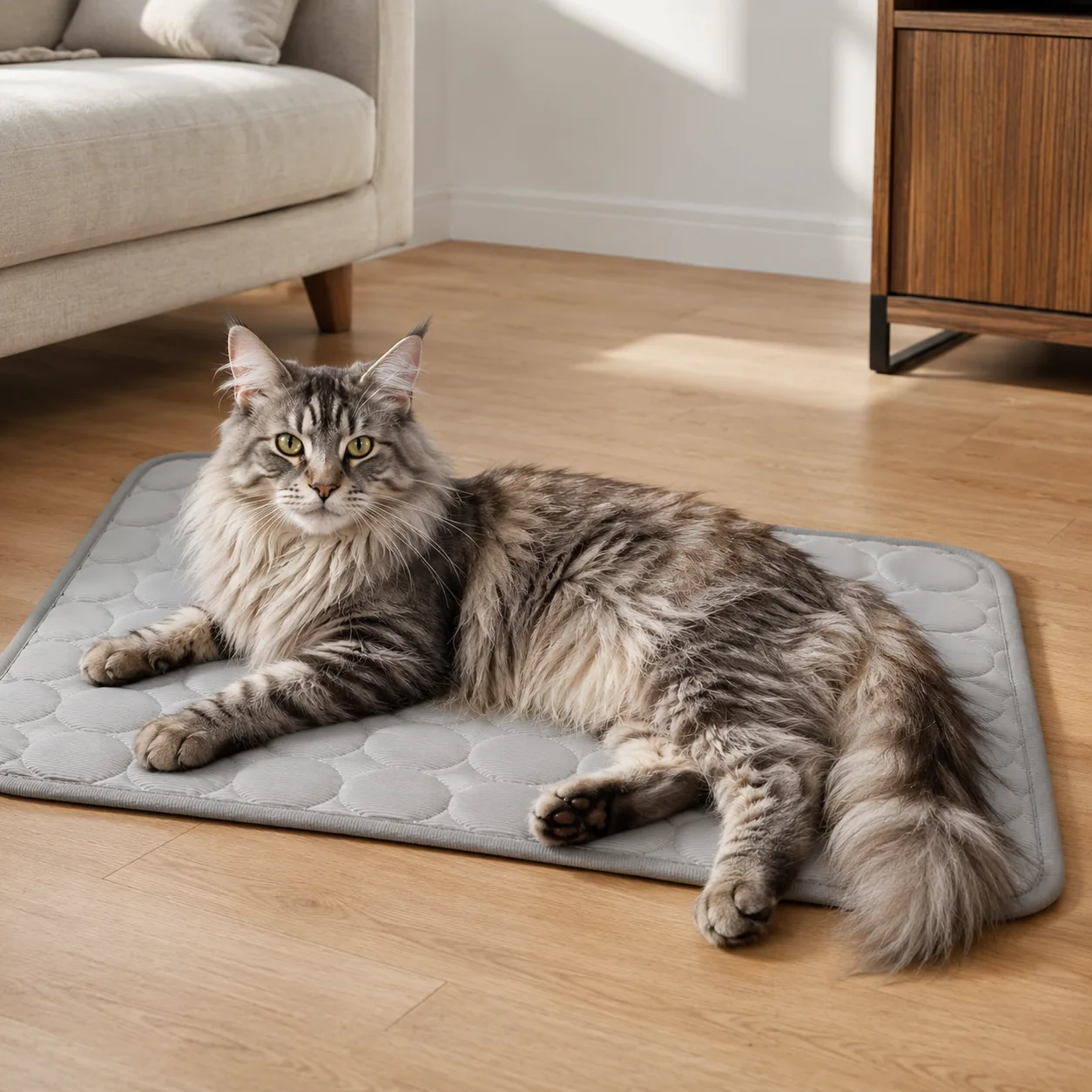
Older cats groom themselves less thoroughly, and saliva evaporating off the coat is one of their few ways to cool down. At the same time they jump up onto the cool windowsill or into the sink less often than they used to.
Both of those lead to the same practical conclusion as with dogs: cool spots at floor level, where they already lie down. And water on the same floor, because stairs get rarer too. Kidney disease is common in older cats, which is why fluid loss in the heat hits them harder. The rest of what helps is in how to cool down a cat.
Frequently asked questions
At what age is a dog considered senior?
It depends heavily on size. Large breeds like the Bernese Mountain Dog or the Great Dane are often considered senior from six, medium breeds from eight, small dogs only from ten or twelve. For cats, eleven is the usual figure. What actually matters is not the number, though, but whether behaviour and stamina have changed.
My senior dog is just tired in summer, is that normal?
Moving less in the heat is normal for any animal. What should not be written off as old age is different: sudden exhaustion after a few steps, fast breathing while standing still, coughing, or a swollen belly. Signs like those can involve the heart or the lungs, and summer only makes them easier to notice. They belong at the vet, not on a cool surface.
Can an older pet get too cold on a cooling mat?
Not with a passive ice-silk mat, because it never gets colder than the room. With freezer packs you do need care: sharp cold on thin, older skin can be uncomfortable, and a stiff animal will not get up quickly to move away. Use something in between, and keep an eye on it.
How much water does a senior dog need in summer?
More, and left to themselves they usually drink less. Older animals sense thirst poorly, and if there is kidney trouble they lose more fluid as well. Several bowls in places they can reach without stairs is, in practice, the change that makes the biggest difference. If kidney disease is already diagnosed, agree the amount with your vet.
Should I walk my senior dog less in summer?
Not less, but differently. Several short outings in the cool hours do more than one long one, and movement still matters for joints and circulation. What goes is the midday walk and the hot asphalt: older paw pads are often more sensitive.
This text does not replace veterinary advice. With an older animal whose stamina has changed, the check-up belongs at the start of summer, not at the end of it.
Flat, padded, flush with the floor
No edge to step over, no hard tile. Four sizes, no gel and no power.
Free shipping to 18 countries · 30-day returns · We reply within 24 hours