
How we test
4.5/5 from 1,226 verified buyer reviews.
We do not promise performance nobody could check. Every number published on this site comes from a measurement we explain in plain terms.
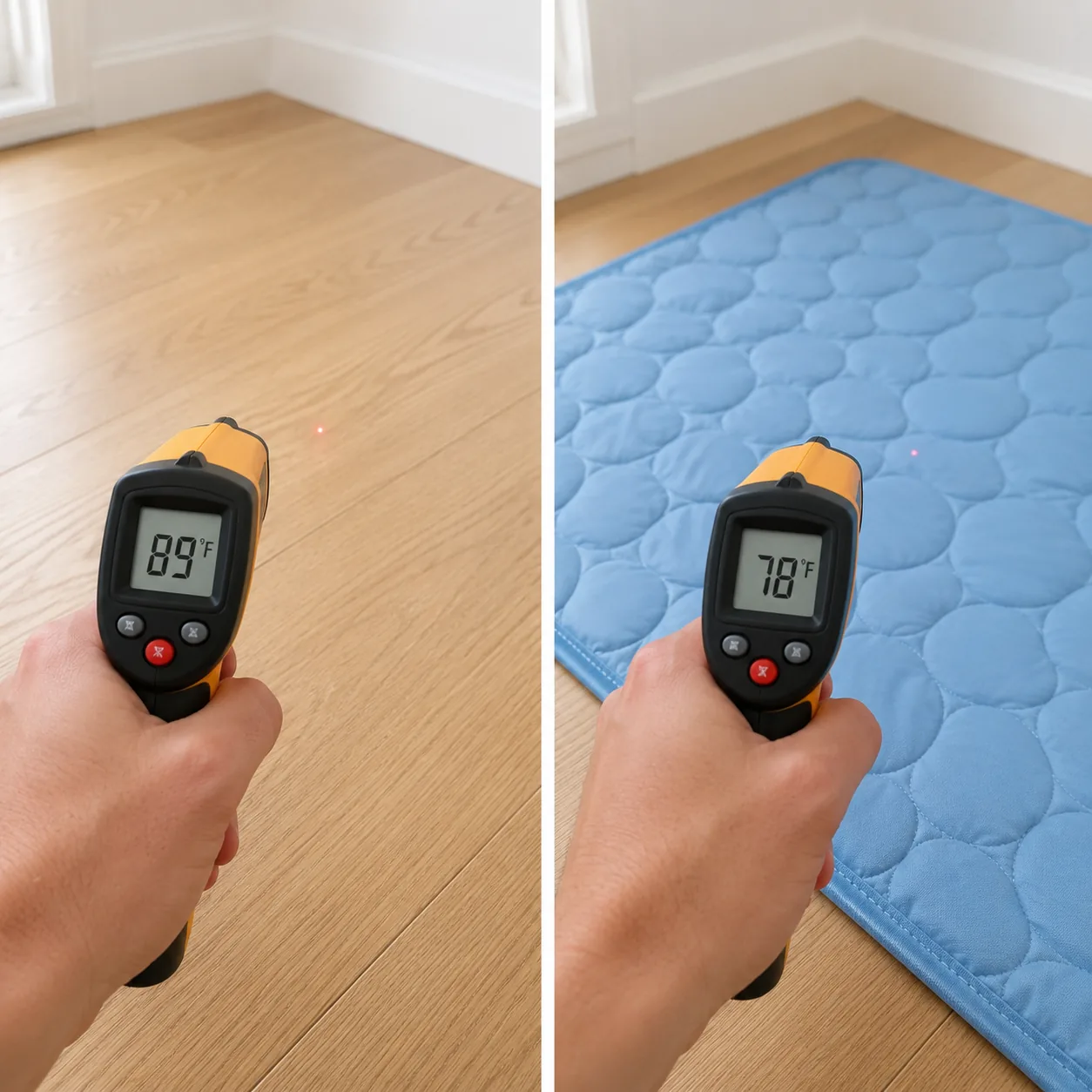
In our own test, an infrared thermometer read 89 °F on the floor and 78 °F on the mat, an 11 °F difference.
This page gives you our measuring method, its limits, and where each figure comes from.

Tessa Larkin · Writer, pet wellbeing and pet gear
Tessa lives with a Labrador and two cats on the Texas Gulf Coast, one of the hottest and most humid corners of the country in summer. For several seasons she has been testing, in real conditions, what actually helps animals through the heat and what only looks like it does.
1. The temperature measurement
We took an ordinary infrared thermometer and made two readings, in the same room, at the same room temperature, seconds apart: one on the bare floor, one on the surface of the mat, which had been sitting unused in the same spot beforehand.
Result: 89 °F against 78 °F, eleven degrees of difference. The photo of both readings is on the page about how cooling mats work, with both displays visible.
The part that matters is the starting figure. Claims like "3 to 4 degrees cooler" or "up to 10 degrees cooler than the surrounding area" appear on plenty of listings, almost always without saying what the reading was taken against. Without a starting figure, a number of degrees is not information. Ours is 89 °F, taken in the same room seconds apart.
What no passive mat can do, ours included, is go below the temperature of the room. That would take a power supply, and there is none. What it can be cooler than is the floor, which the animal has been warming by lying on it.
These are everyday conditions, a house in summer, and they are exactly the context the mat is used in. You can repeat the same test at home with an infrared thermometer that costs a few dollars.
2. The materials statement
We read the fiber composition off the label of a physical unit, rather than copying it from the supplier's spec sheet. That is not a detail: supplier sheets are frequently imprecise, and the composition is the one thing that explains why a mat should cool at all.
| Top layer | 75% polyamide, 25% polyester |
|---|---|
| Filling | 100% cotton |
| Bottom layer | 100% polyester |
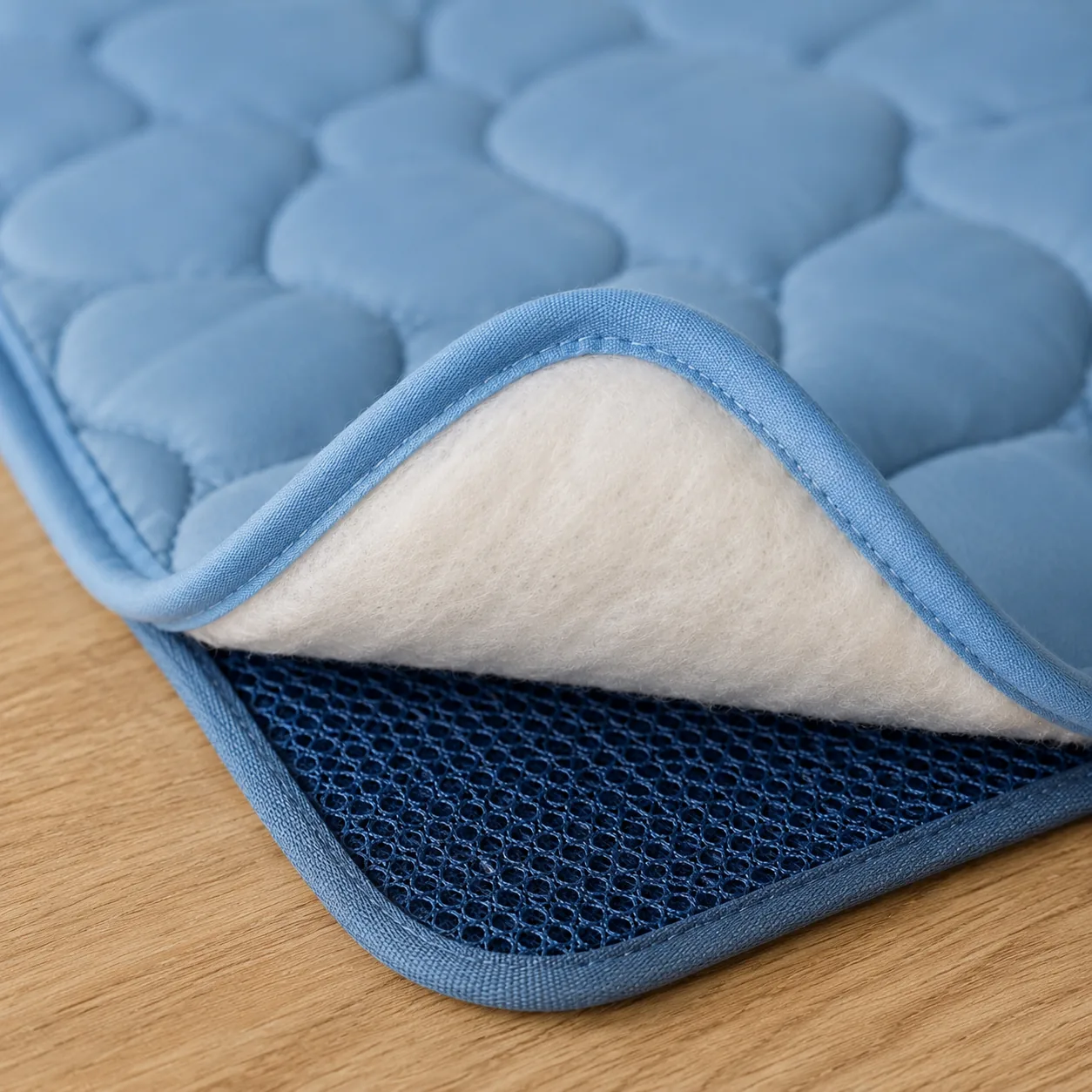
The three percentages refer to the three layers, not to the product as a whole: the "100% polyester" on the label applies to the underside. It is a distinction that changes everything, because the cooling comes from the polyamide on the top layer, and without percentages that line cannot be read at all.
3. The look at the market
On August 4, 2026 we went through the first-page results for dog cooling mat, cooling mat for dogs and cat cooling mat. For each one we opened the product page and looked at the price range and the technology stated.
Two findings shaped these pages. Every seller we looked at offers gel or water-filled mats, and we found no other seller of gel-free ice silk on this market. And the most common question is the same as on every other market: whether a mat like this works at all. Out of 172 related questions in our keyword corpus, 58 contain the word "work". That is why the measurement sits near the top of our pages rather than in a footnote.
Price figures on our pages carry that date. Prices change, and a price without a date is sooner or later simply false.
4. The reviews
The 1,226 reviews come from verified buyers of the same mat, and the average published is the one for the whole corpus.
Full details on the Reviews page.
5. What our claims rest on
So you know what sits behind each number on these pages:
Durability: what we say rests on the construction, since a sewn fabric with no chambers has no point a filling could escape from, and on what buyers report, including more than once that it "holds up well after several washes".
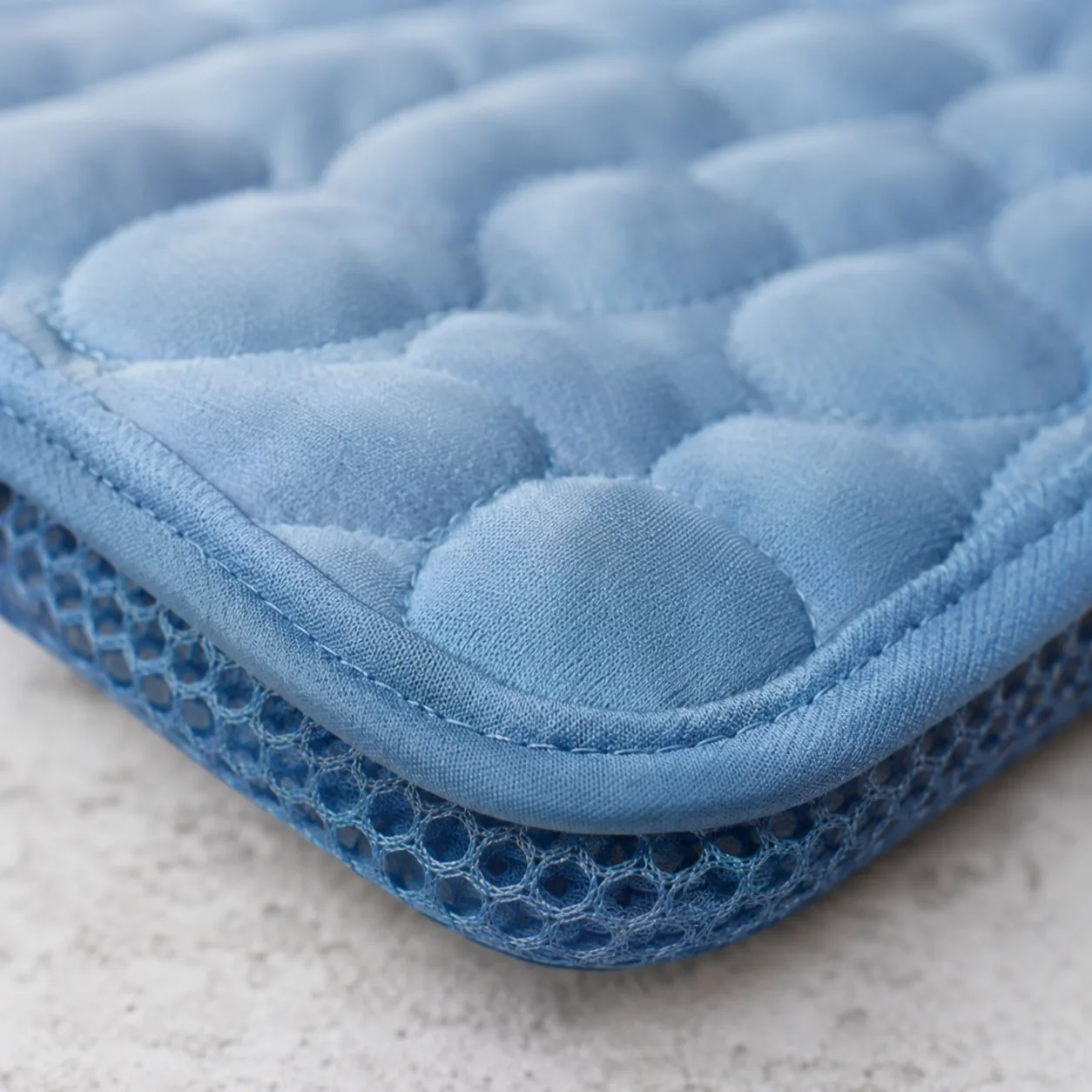
Claws: our claim is a description of the construction, checkable in a second. The mat is stitched and contains no chambers or pouches, so there is nothing that can open and leak.
Comparisons: they concern technologies and publicly stated data, meaning fiber percentages, dimensions and quoted duration, all of which you can read back yourself on any product page.
Health questions belong with a vet. You will therefore find no veterinary recommendation anywhere on these pages.
A question about the method
If you want to check a figure on these pages, or know how we arrived at it, write to [email protected]: a person answers, seven days a week. A materials statement or a temperature figure can be challenged in law as well as in argument, so we have very concrete reasons to be precise.
The test that counts happens in your home
30 days to try it, free returns and free shipping. Four sizes, four colors.
Free shipping to 18 countries · 30-day returns · We reply within 24 hours