Cooling mat for rabbits: the most heat-sensitive pet in the house
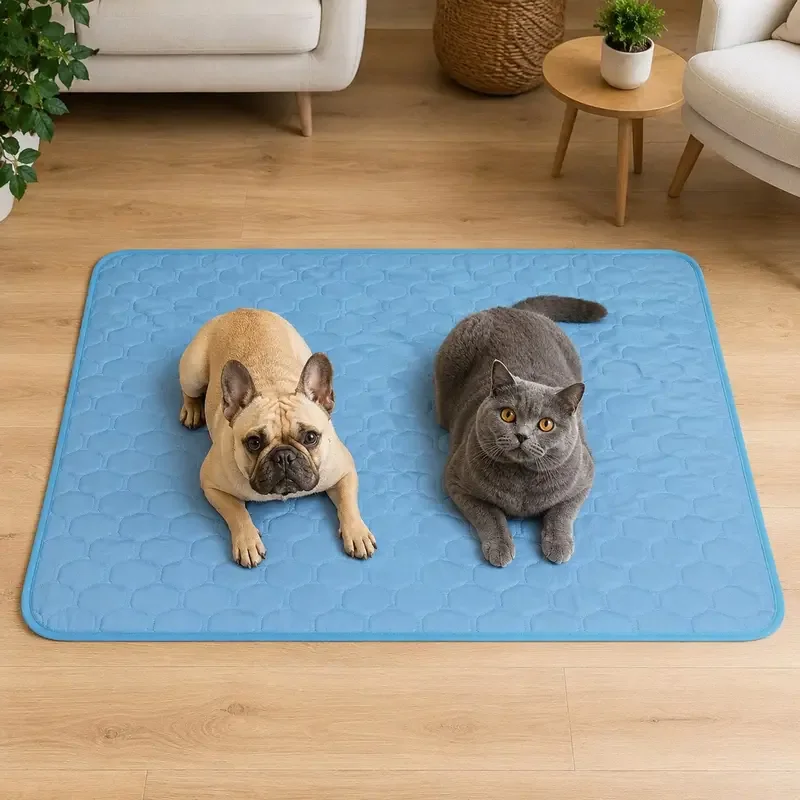
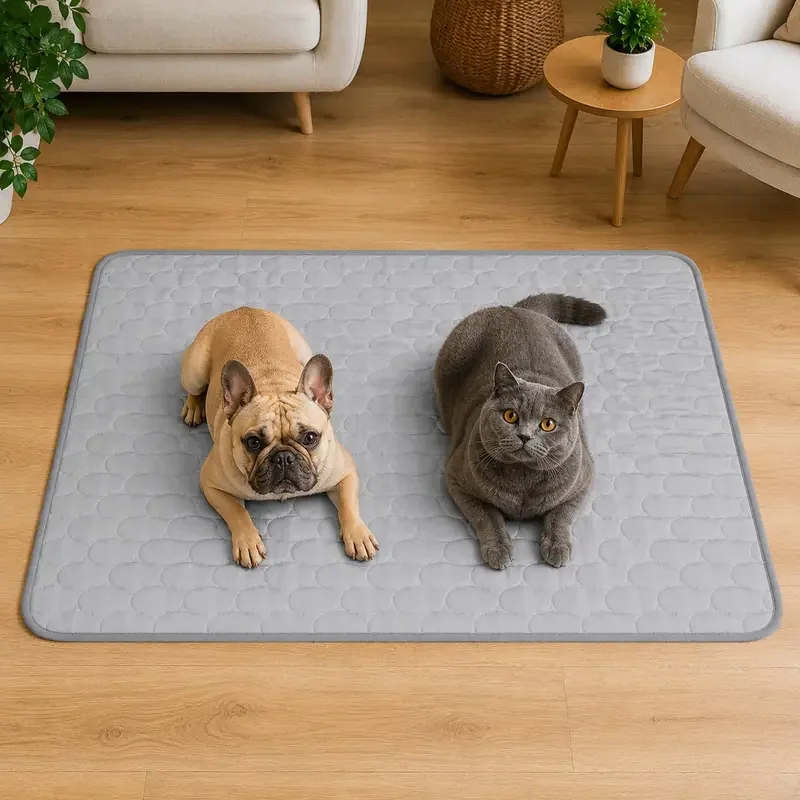
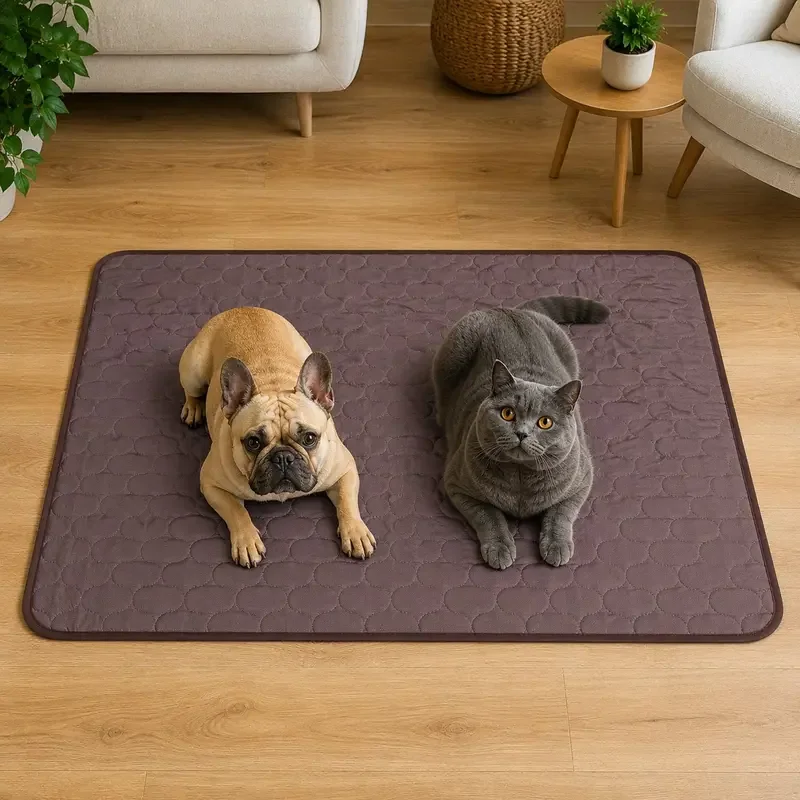
Color: Blue
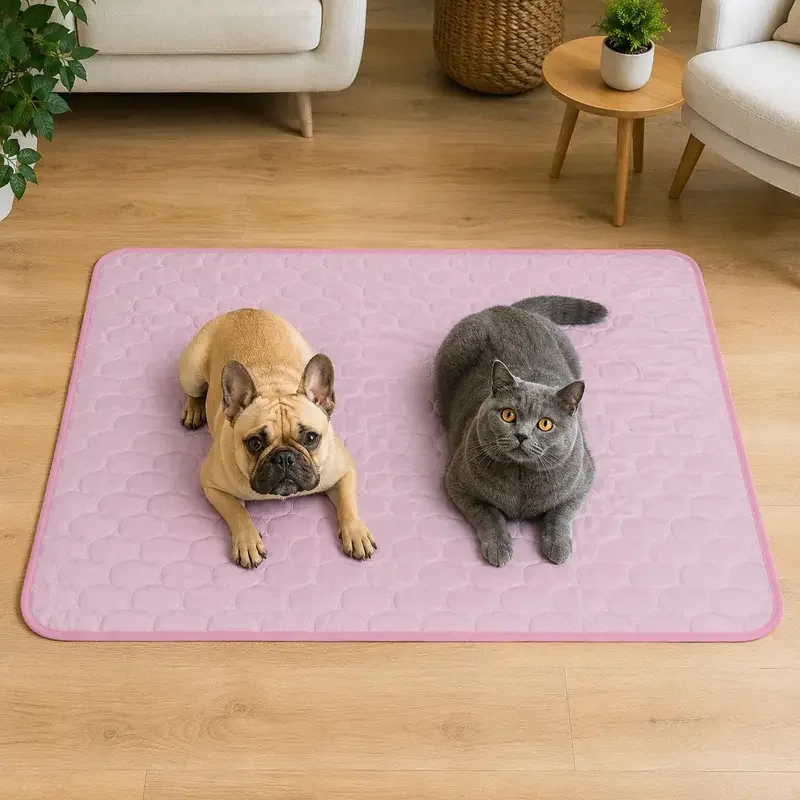
up to 11 lb · rabbits, Chihuahua, Miniature Dachshund, Havanese, British Shorthair, kittens
- Free shipping to 18 countries, at your door in 6-10 business days
- 30-day returns
- Free gift: a pet hair removal glove with every order
Want two mats? The third one is free in the set below.
Set of three: buy two, get the third free
Pick the size and color of your first two mats. The third one is free, in the size of the smaller of the two, and you choose its color freely.
Color: Blue
Price: $49.99
Color: Blue
Price: $39.99
Size S
(automatic: the smaller of the two sizes)
Color: Blue
$0.00 FREE

Tessa Larkin · Writer, pet wellbeing and pet gear
Tessa lives with a Labrador and two cats on the Texas Gulf Coast, one of the hottest and most humid corners of the country in summer. For several seasons she has been testing, in real conditions, what actually helps animals through the heat and what only looks like it does.
Why heat affects rabbits differently
A dog pants, a person sweats. A rabbit can do neither. Two routes are left to it, and both are limited.
The ears. They carry a great deal of blood and work as a heat exchanger: blood passes through them, gives heat off to the air and comes back cooler. It is why desert rabbits have such large ears. In our domestic rabbits, and above all in lops with their ears hanging down, that surface is markedly smaller.
Contact with cool surfaces. A rabbit that is too hot stretches out flat on tile, presses its belly to the floor and moves as little as possible. That is exactly the behaviour you see in summer, and it is not laziness: it is thermoregulation.
The second route is the one you can do something about. For a rabbit, then, a mat that absorbs heat is closer to a necessity than to a comfort item.
The numbers to go by
| Temperature | What it means for a rabbit |
|---|---|
| 64-72 °F | comfort zone |
| from 77 °F | goes listless, eats less, looks for cool surfaces |
| from 82 °F | critical, needs watching closely |
| above 86 °F | markedly higher risk of heatstroke |
For comparison: a dog at 77 °F is still doing fine. For a rabbit the same temperature is already a reason to watch their behaviour. The most at risk are lops, long-haired breeds such as the Angora, and overweight animals.
Why gel is the worst choice for a rabbit
Rabbits gnaw. It is not bad behaviour, it is a necessity: their teeth grow throughout their lives and have to be worn down. Everything within reach gets gnawed sooner or later.
So a gel mat inside the enclosure is only a matter of time. If the casing opens, the gel comes out, spreads through the coat and is swallowed during grooming. On top of that comes the mechanical risk of swallowed film fragments, which weighs more on a rabbit’s gut than on a dog’s or a cat’s.
Our mat contains no filling liquid at all.
Material composition
| Top layer | 75% polyamide, 25% polyester |
|---|---|
| Filling | 100% cotton |
| Bottom layer | 100% polyester |
Read off the label of an actual unit.
A good habit, in any enclosure: always keep hay and a couple of chew sticks available. The teeth stay busy where they should, and the mat stays what it is, the surface the rabbit stretches out on. There is more on safety on the page about the gel-free cooling mat.
Where it goes inside the pen
In the coolest corner, not in the middle and never in the sun. A mat in the sun warms up like any other surface, and at that point it is no use at all.
Not near the feeder, or it becomes the base layer for hay and droppings instead of a surface to lie on.
If the rabbit lives outdoors, it goes in the shade, and in the shade that is still there at midday. A hutch that is shaded in the morning can be in full sun by the afternoon.
In practice rabbits accept the mat faster than cats do. It stays flat, it smells of nothing much, and it does not get in the way of their routes. One buyer put it exactly like this:
« I love how its soft material and actually cools the pet, i use it for my rabbits! »
Verified buyer
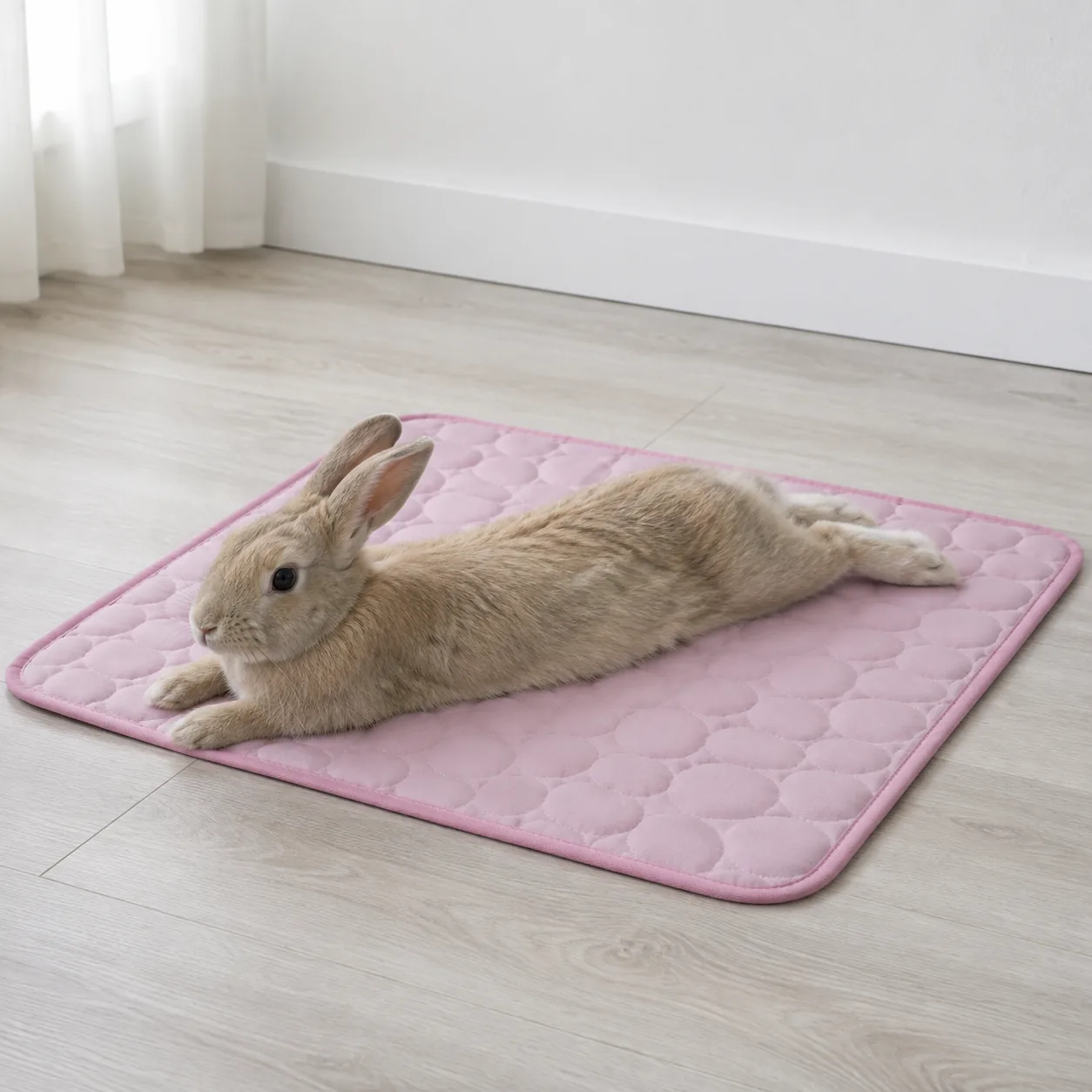
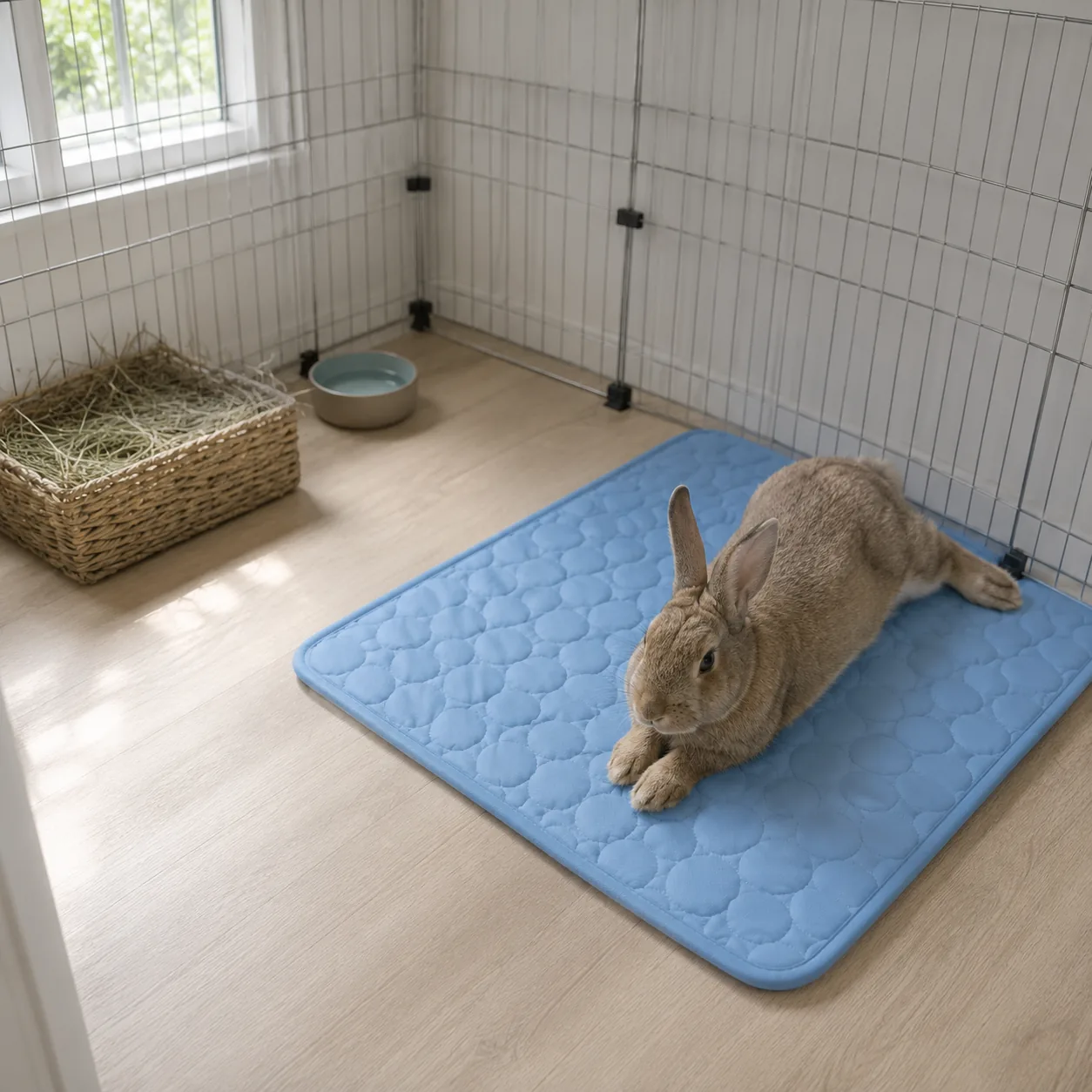
The mat, and what to put around it
With a rabbit the margin is narrower than with any other species, so the pieces have to be in place together: shade, moving air, fresh water and a surface to shed heat into. They are four parts of the same job.
The fourth is the one you can act on directly and continuously, because it stays there all day with nothing to recharge and nothing to put back in the freezer. On the hottest days it also helps to move the enclosure to the coolest part of the house and to air out early, before the heat builds: the mat goes in the corner that stays shaded.
How it works physically is explained on the page about how cooling mats work.
Frequently asked questions
Do rabbits need a cooling mat?
They benefit from one more than dogs or cats do. Rabbits cannot pant and they do not sweat. They shed heat almost entirely through their ears, which are densely supplied with blood, and through contact with cool surfaces. A surface that absorbs heat therefore hits exactly the one route that actually works for them.
At what temperature does it become dangerous for a rabbit?
Rabbits are comfortable around 64 to 72 °F. From 82 °F the situation gets critical, and above 86 °F the risk of heatstroke climbs sharply. The signs are fast shallow breathing, a wet nose, apathy, the head pulled back. That is an emergency and it means the vet straight away, not a mat.
Is a cooling mat safe for a rabbit?
With a gel-free mat, yes. Rabbits gnaw everything, which makes gel mats the worst possible choice for them specifically. Ours is a stitched fabric with no filling liquid: there is no pouch that can open and nothing comes out. As with any fabric in a pen, keep hay and chew sticks available, so the mat stays the place where they stretch out.
What size does a rabbit need?
The S at 19.7×15.7 in is enough for one rabbit. For a bonded pair the M at 27.6×21.7 in is better, because rabbits like to stretch out side by side. For a pen, the L covers a whole corner.
Can I put it inside the pen?
Yes, ideally in a shaded corner and away from the feeder. It stays flat and does not slide. If your rabbit lives outdoors, put it in the coolest spot and never in the sun, otherwise it warms up like any other surface.
What about guinea pigs and other small pets?
Same principle. Guinea pigs, chinchillas and ferrets do not sweat either, and they regulate through behavior and contact surfaces. Chinchillas are especially fragile, because their extremely dense coat traps heat: for them, heat becomes dangerous even sooner than for a rabbit.
This page does not replace veterinary advice. If you suspect heatstroke, contact a veterinary practice straight away. For dogs and cats, see the dog cooling mat and the cat cooling mat.