
Cooling mat, cooling vest or cooling bed: which one, and when?

Tessa Larkin · Writer, pet wellbeing and pet gear
Tessa lives with a Labrador and two cats on the Texas Gulf Coast, one of the hottest and most humid corners of the country in summer. For several seasons she has been testing, in real conditions, what actually helps animals through the heat and what only looks like it does.
The overall picture
| Situation | What covers it |
|---|---|
| Your pet lying down indoors | the mat, in the coolest room, in the spot you choose |
| At night, where they already sleep | the mat, laid inside the bed they have always used |
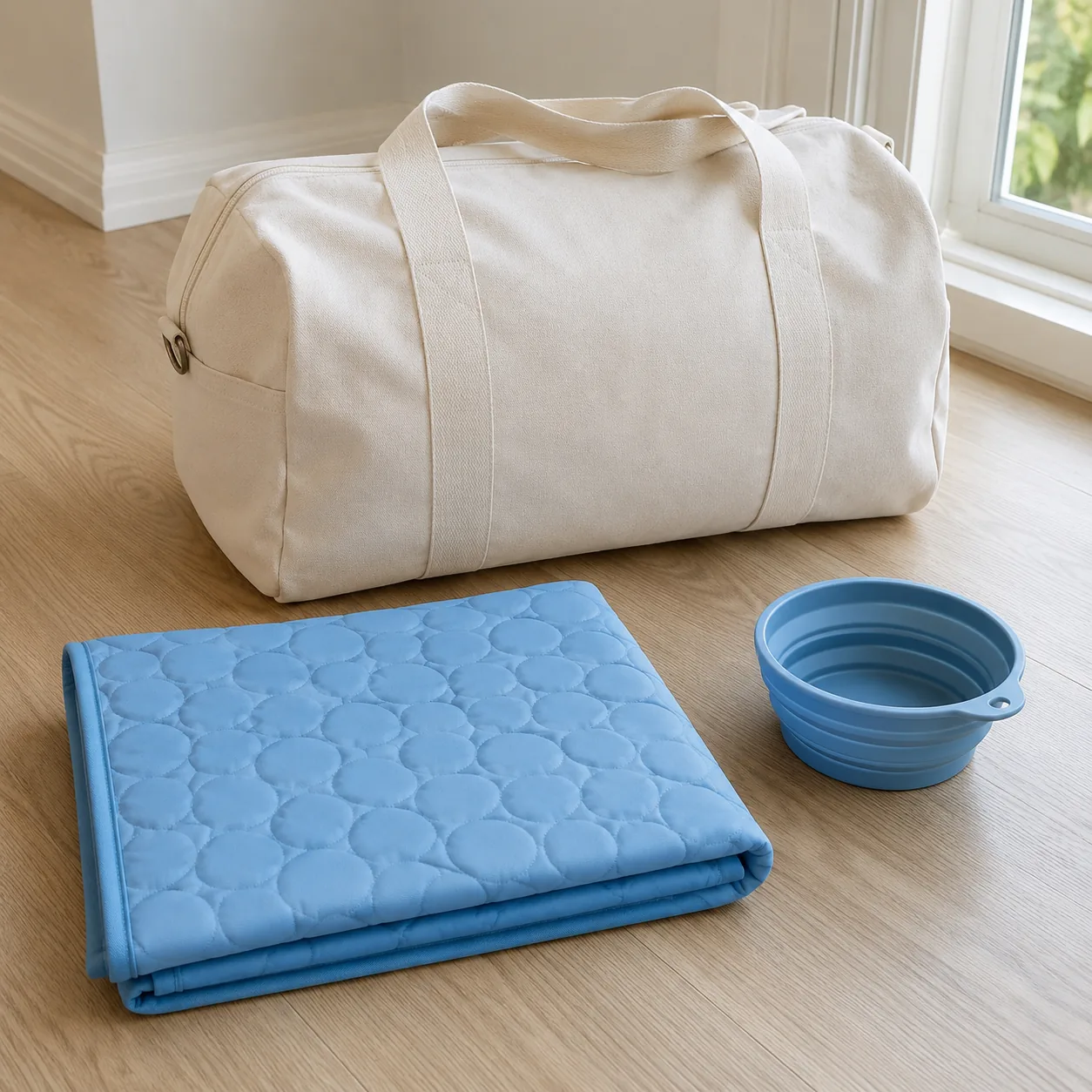
| In the car and away from home | the mat: it rolls up, weighs nothing and needs no recharging |
| Couch, crate, porch | the mat, which moves with the animal |
| Humid weather, when evaporation fails | the mat, which works by contact rather than evaporation |
| A long walk | the right hour and shade, and a cool surface to lie on when you get back |
Five situations out of six are covered by the same object, and that is not a coincidence: the mat is the only format that follows the animal instead of staying in one corner of the house. And the humidity row matters more here than almost anywhere: the section below explains why.
Why almost every household starts with the mat
A dog sleeps between twelve and sixteen hours a day, a cat even more. For your animal, most of summer is made of lying down, and that is exactly the position in which they can shed heat through the belly and the inner thighs, where the coat is thinnest.
It is why in summer animals take themselves off to the hallway tile, the shower tray or the bathroom floor. A mat is the same idea, in a spot you choose, and padded instead of hard. How it manages that physically is explained in how cooling mats work.
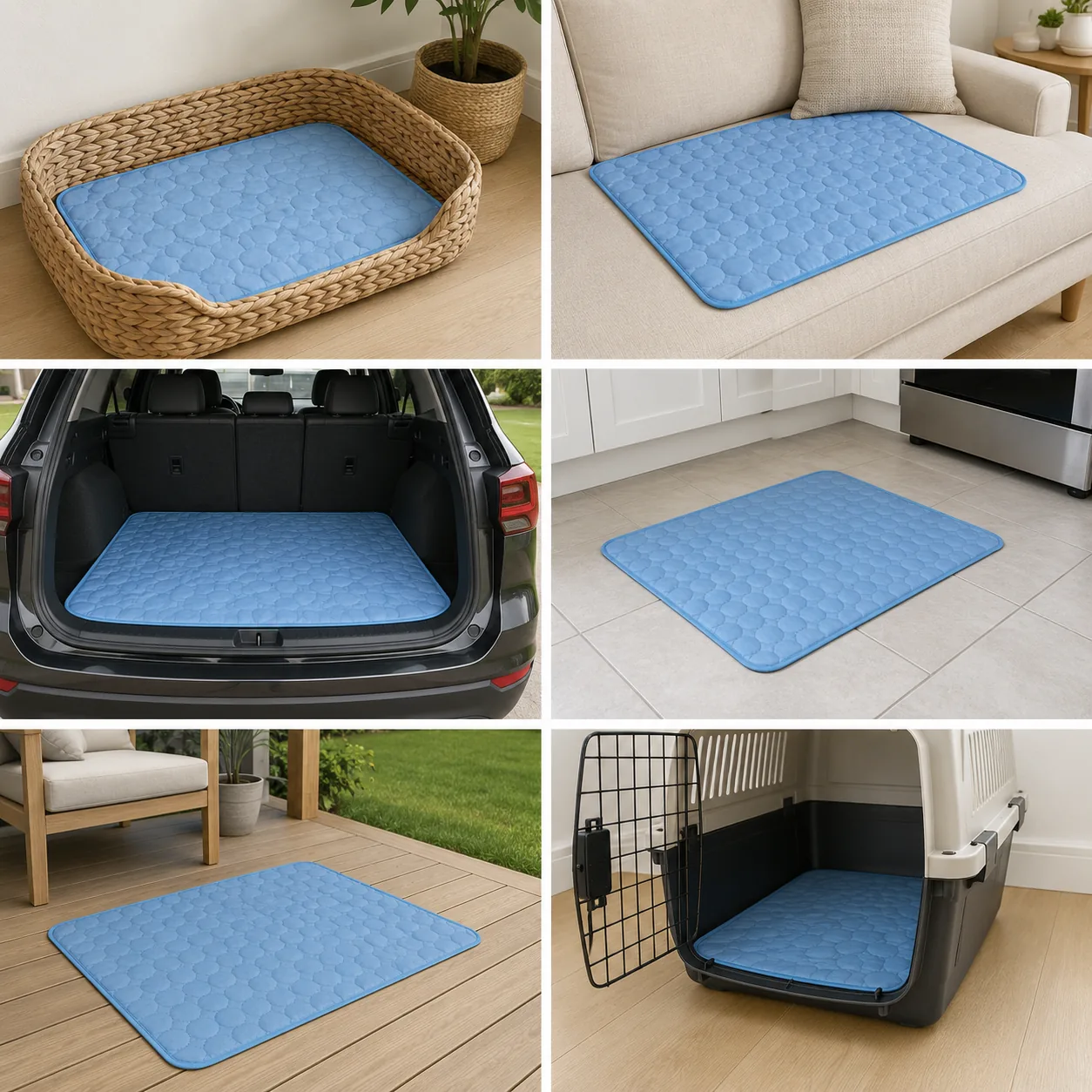
And because it is flat and rolls up, it is the only one of the six formats that follows the animal: the living room in the morning, the trunk in the afternoon, the porch in the evening, the rental at the coast in August.
Cooling vest: the limit to know before you buy one
Most vests work by evaporation: you wet them, the water evaporates, and evaporating carries heat away. In dry heat that works.
In humid heat it works badly, because air already loaded with moisture will not take up more. And humid heat is precisely the condition in which a dog suffers most, because their panting relies on evaporation too. Across the Southeast and along the Gulf Coast in July and August that is the normal state of things, not the exception: a vest helps least on exactly the days you would need it most.
Second point: a vest stays on the animal. One that is already too hot does not necessarily experience an extra garment as a relief. Some dogs wear it without a problem, others do not.
A mat does not have that limit, because it does not work by evaporation: it takes heat up by contact and spreads it through the ice silk fiber. At 30 % humidity or at 80 %, it behaves the same way.
Cooling bed: the raised edge is the problem
The argument for a cooling bed is that the animal already sleeps there, so there is nothing new to get used to.
Except that argument is free: a mat laid inside the bed you already own does exactly the same thing, and the spot stays the one it has always been.
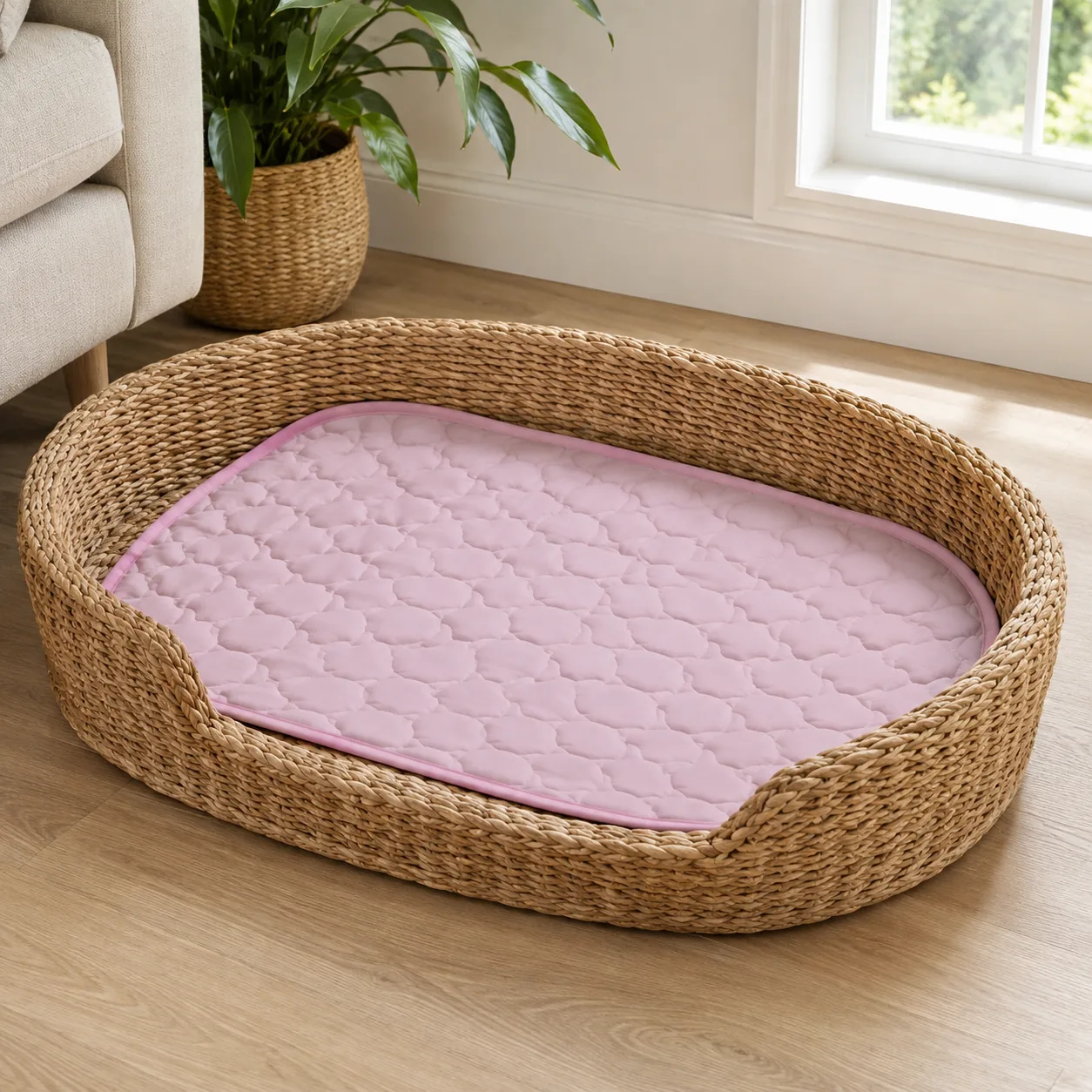
The difference is the edge. A raised edge slows the air exchange around the surface, and part of the heat that should be leaving stays inside. With older animals there is a practical point on top: a stiff dog that has to climb over an edge eventually stops getting on it and lies on the floor alongside instead. That is picked up in senior dogs and cats in summer.
And a bed stays where it is. It does not go in the car, out on the porch, or away on a trip.
What you can skip
Cooling sprays. The effect is a short burst of evaporation and then nothing. A damp cloth costs nothing and lasts just as long.
Freezer packs against the animal. With nothing in between, sharp cold on thin skin can go from uncomfortable to harmful, above all on small animals, puppies and seniors. Wrap them in a towel, and keep watch.
Shaving double-coated breeds. On a German Shepherd, a Husky or an Australian Shepherd the coat also protects against heat coming from outside and against sunburn. Brushing the undercoat out does more, and it does not remove the protection.
What makes any of these work better
Shade, moving air, fresh water and walks at the right hour. None of those is a product, and all four make a cool surface work better rather than replace it: blinds down before the sun hits the glass, and the mat in the coolest room in the house.
The rest of what helps day to day is in how to cool down a dog and how to cool down a cat.
Frequently asked questions
Cooling mat or cooling vest, which one?
The mat, if you are only buying one: it covers the longest part of the day, the hours your animal spends lying down, and it follows them indoors, in the car and away from home. A vest works by evaporation, so it does least in humid air, which across the Southeast and the Gulf Coast is simply what July and August are, and it stays strapped to an animal that is already too hot.
What is a cooling bed?
It is a bed with a cool surface, usually with a raised edge. That edge slows air exchange and traps part of the heat that should be leaving the surface, and the bed does not travel to the car or a rental. Anyone who wants the same result without giving up the usual spot simply puts a mat inside the bed their animal already has.
Are cooling bandanas any use?
Very little, and not for long. A bandana cools while it stays damp, and in heat it dries fast; in high humidity it barely evaporates at all, so it does least on the days you need it most. A cool surface to lie on does not depend on evaporation and does not need re-wetting every half hour.
Is a pool better than a cooling mat?
They are two different things. A pool is tied to one spot in the yard, it works only while the dog is in it, and the animal comes out wet; plenty of dogs, and virtually every cat, will not get in at all. That leaves every other hour of the day uncovered, which is most of them: for those you need a cool surface to lie on, indoors and out.
The format that follows your pet
Four sizes, rolls up, no gel to freeze and no power. Free returns within 30 days.
Free shipping to 18 countries · 30-day returns · We reply within 24 hours