
How to cool down a cat: 8 things that actually work

Tessa Larkin · Writer, pet wellbeing and pet gear
Tessa lives with a Labrador and two cats on the Texas Gulf Coast, one of the hottest and most humid corners of the country in summer. For several seasons she has been testing, in real conditions, what actually helps animals through the heat and what only looks like it does.
1. Air out early, then shade the room
The single most effective measure costs nothing and is not even about the cat. Air the place out between five and eight, then windows shut and blinds down before the sun hits the glass, not after. A house that did not warm up in the morning stays several degrees cooler all day.
2. More water stations, away from the food bowl
Cats naturally have a weak thirst drive, because their ancestors took in fluid from their prey. One bowl next to the food often gets ignored. Two or three bowls in different parts of the house get accepted far better, and a fountain even more so, because moving water is more inviting to a cat.
If you feed dry food, watch this in summer in particular: part of the fluid a cat needs usually comes from wet food.
3. Offer cool surfaces where they already lie
In summer your cat takes herself off to the bathroom tile, the sink or a shaded windowsill. It is not a quirk: it is her main route for shedding heat, through the underside of the body where the fur is thin.
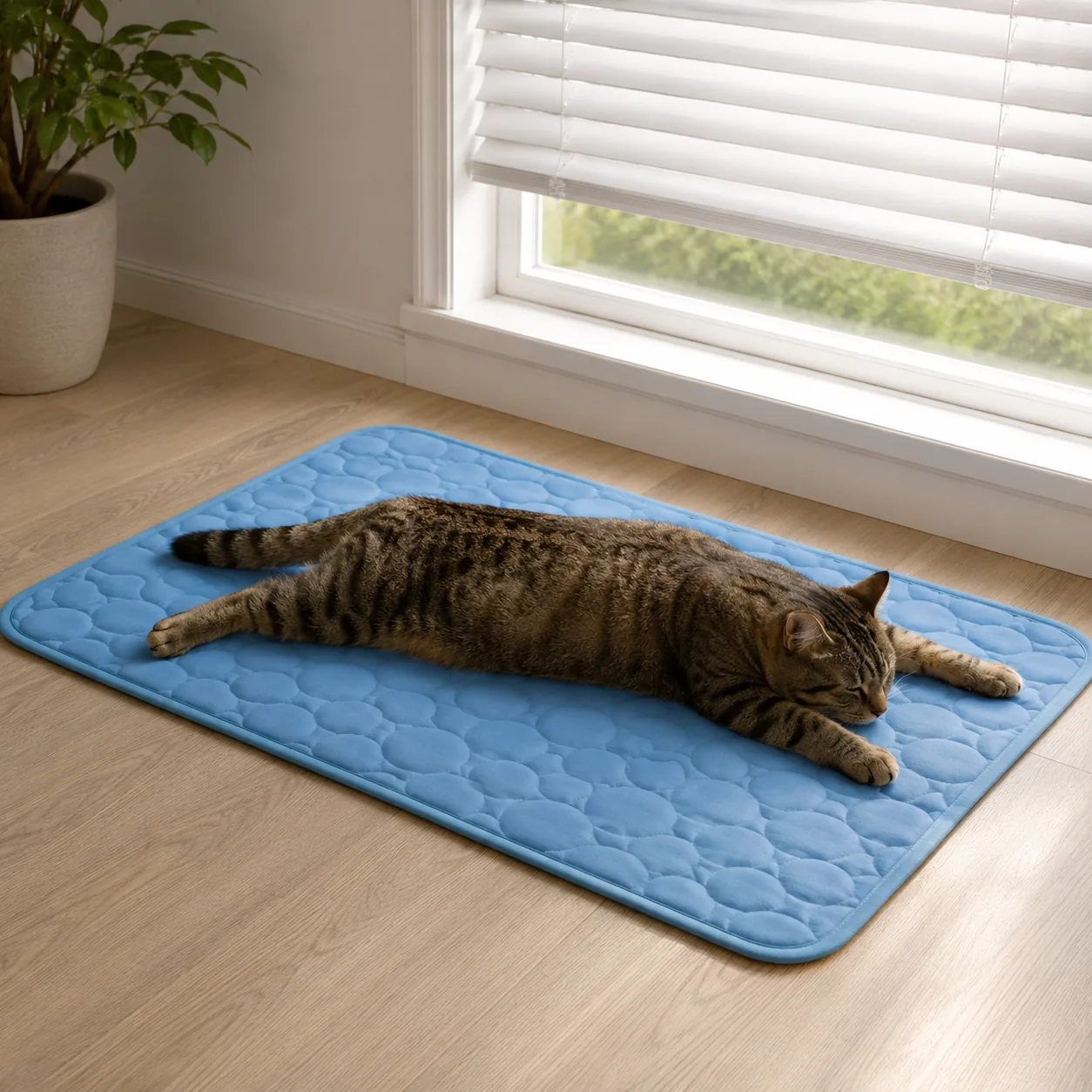
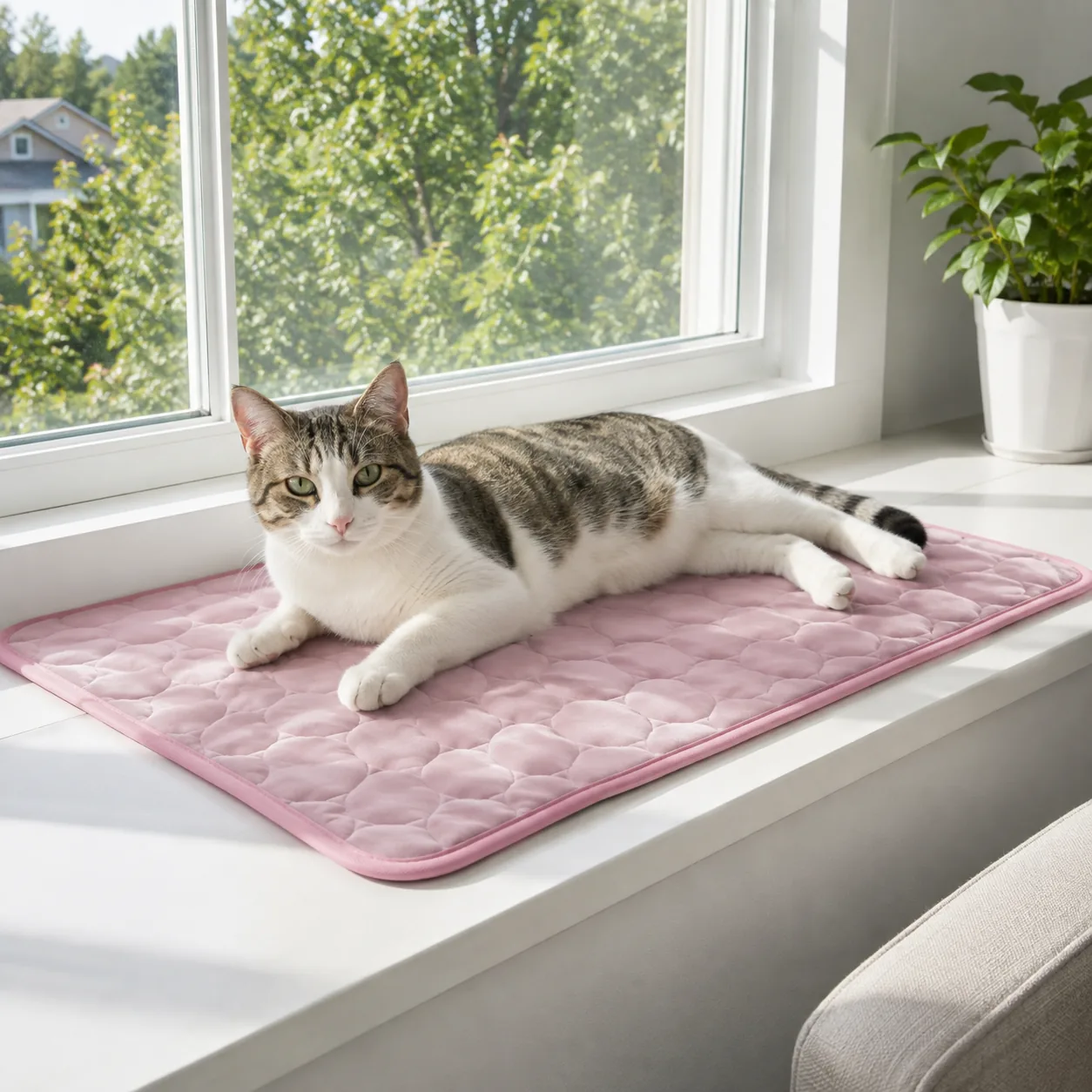
A cooling mat is exactly that kind of surface, in a place you decide, so she does not have to fall back on the bathroom floor. Placement is what matters: put it where she already sleeps, not somewhere new. A mat set down in an unfamiliar spot often gets ignored, and that is a matter of habit rather than of product.
4. A damp cloth rather than a shower
Gently wipe a damp cloth over the coat, the ears and the paws. The ears carry a lot of blood and are one of the few places a cat gives off heat to any real degree.
What not to do: pour water over her or put her in the tub. Most cats experience that as serious stress, and stress generates more body heat. You make the situation worse rather than better.
5. Brush, do not shave
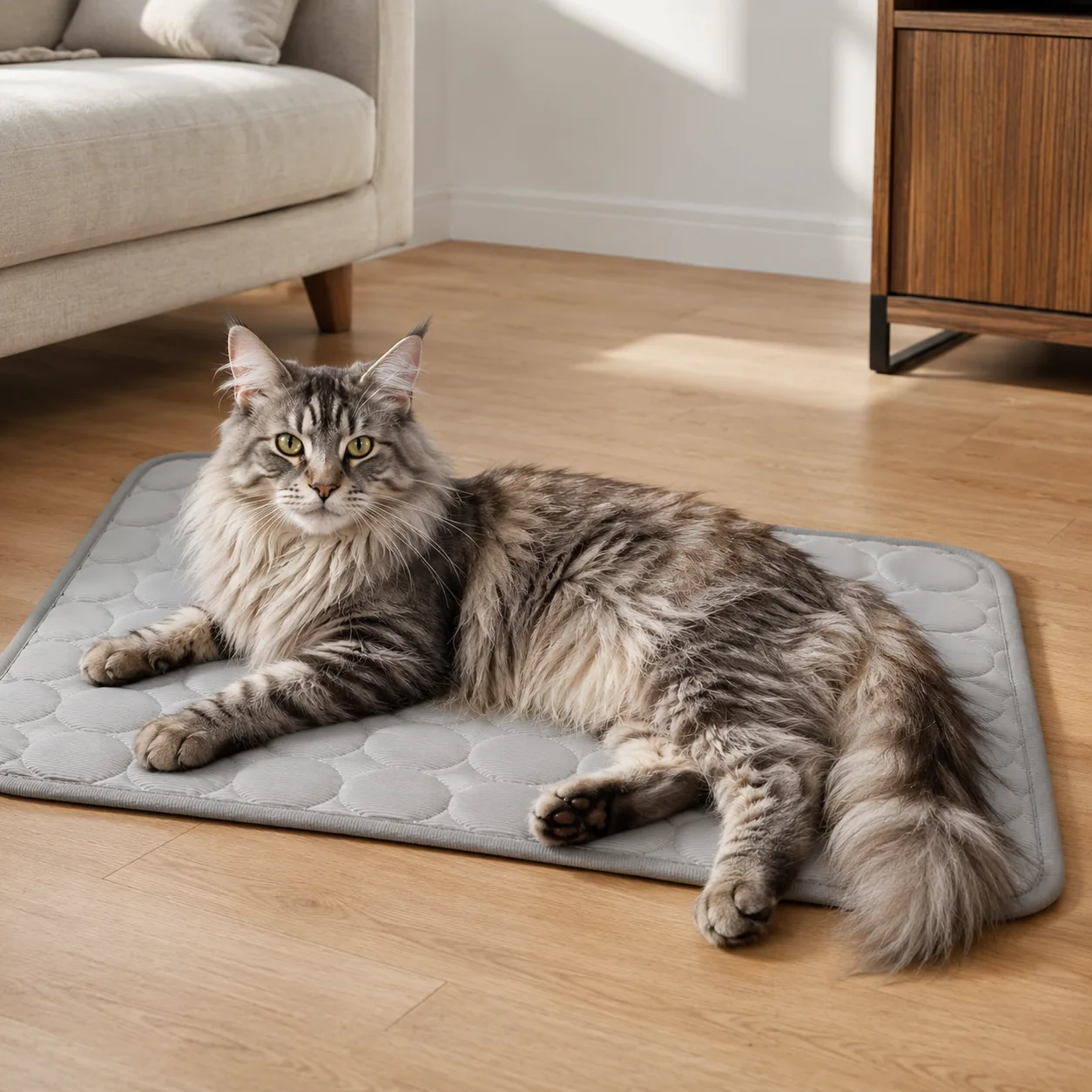
Dead undercoat works as an insulating layer. On a Maine Coon, a Persian or a Norwegian Forest Cat, brushing regularly through the summer makes a difference you can feel.
Shaving, with cats, almost never makes sense. Fur also protects against outside heat and against sunburn on pale skin. If the coat is matted, that is a job for experienced hands, not household scissors.
6. Aim the fan at the room, not at the cat
Moving air cools mainly by evaporating sweat, and cats sweat only through the paw pads. A fan pointed straight at the animal therefore does little, and many cats avoid it.
More effective is something that circulates the room air, or that pushes the hot air out in the evening. It lowers the temperature of the room, and the cat benefits indirectly but far more.
7. Move play and meals to the cooler hours
A cat wound up into playing at noon at 90 °F produces heat she then struggles to get rid of. Shift the active phases to early morning and late evening, which is what she does on her own anyway.
The same goes for food: wet food left out for hours at midday spoils quickly. Smaller, more frequent portions make more sense in summer.
8. For outdoor cats, leave a shaded way back in
Cats that go outside find their own cool spots, but they sometimes misjudge the distance home. An open cat door and a water bowl in the shade by the door solve nearly all of it.
One thing costs animals their lives every year: garden sheds, garages and cars. A cat that wanders in during the morning and gets shut inside ends up somewhere that goes past 120 °F. Check before you close, every time.
Frequently asked questions
What is the best way to cool my cat down?
By giving them the means to do it themselves. Offer cool surfaces to lie on, air the house out early and shade it through the day, and put several water bowls in different places. Doing things directly to the animal, like wetting them, achieves little and creates stress, and stress produces more heat.
Can I wet my cat?
Do not pour water over them. What works and is tolerated by most cats: gently wiping a damp cloth over the coat, the ears and the paws. The ears carry a lot of blood, and that is where the effect is felt most.
Should I put ice cubes in the water?
Better not. Cats often simply will not drink very cold water, and the whole point was to get them drinking more. Room-temperature water in several places around the house does far more.
Do fans help with cats?
Only indirectly. A fan cools mainly by evaporating sweat, and a cat has none. Something that circulates the air of the whole room and pushes the hottest air out helps more than one pointed at the animal.
Should I shave my long-haired cat in summer?
As a rule, no. Fur insulates in both directions and protects the skin from burning. What genuinely helps is brushing the dead undercoat out regularly, above all on a Maine Coon, a Persian or a Norwegian Forest Cat.
This text does not replace veterinary advice.
A cool spot she picks herself
Put it where she already sleeps, not next to it. Four sizes, no gel and no power.
Free shipping to 18 countries · 30-day returns · We reply within 24 hours